Friday, October 14, 2005

Sweet Sorrow


To paraphrase the Bard, parting out is such sweet sorrow.
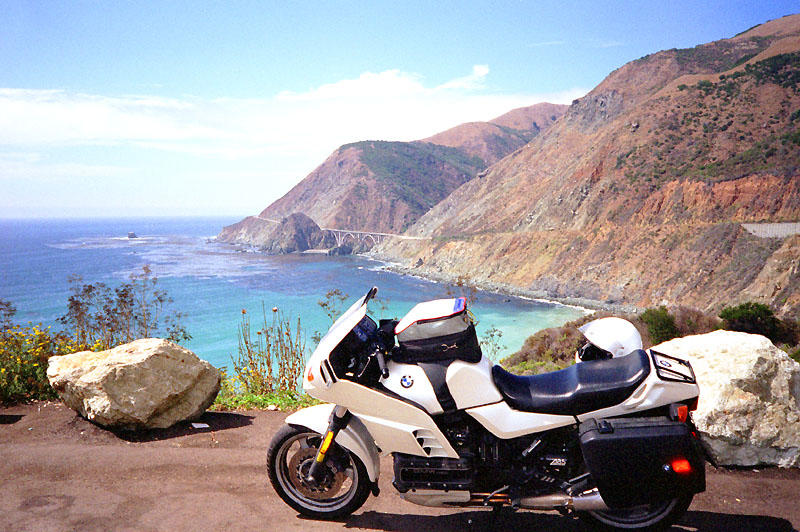
My 1991 BMW K100RS was a fabulous motorcycle. It was pearl silver, just like the one some Japanese design institute hailed as the most beautiful motorcycle in the world in 1991. I remain in full agreement.
On June 24, 1991, when I rode my new bike out of the parking lot of BMW Motorcycles of Indianapolis, I vowed that one day I'd see the odometer turn over 100,000 miles.
I remember chuckling at the audacity of BMW to put an odometer on their K-bikes that would read so high: Most bikes are junk long before their odometers need a sixth digit. But I knew this bike could do 100 grand and lots more.
I really wasn't in the market for a new bike back in the spring of '91. I had 80,000 miles on my 1981 R100RS and still had big traveling plans for that elegant graphite twin that had shown me so much of the country. I figured I'd eventually replace it with another R100RS, since the RS riding position suits me so well.
One afternoon, just to humor dealer Greg Polzin, I took one of his new 16-valve K100s out for a demo ride. In less than 15 minutes, I was utterly seduced by the power and the handling of the new K. As I headed back to the dealership, I was doing the math to buy one of these amazing machines.
Luckily, this seduction came at a time when my finances made the purchase possible and the new bike was soon mine.
A few weeks later, I headed west for a week in Breckenridge, Colo., with Indianapolis BMW Club friends and then on to the Top O' the Rockies Rally in Paonia, Colo., then down through southern Utah to the BMW MOA National Rally in Flagstaff.
I remember how proud I was riding into the rally at Flagstaff. Heads turned. Riders gathered around to ogle the bike whenever I stopped. This was, after all, the new flagship of the BMW line - the latest example of the legendary BMW engineering prowess.
Over the next 12 years, the bike carried me through 40 states and two Canadian provinces.
We've climbed the highest paved road in the United States to the summit of Mount Evans and we've screamed across the Nevada desert at just under 150 mph.
It performed reliably in temperatures ranging from 20 below zero to 115 above.
Together, we've carved twisties from Deal's Gap to Big Sur, endured savage Kansas crosswinds and Wyoming hailstones. We've split lanes in Los Angeles freeway rush hour traffic and passed solitary hours cruising the Natchez Trace and the Blue Ridge Parkway.
We've raced thunderstorms across the southern Utah wastelands and probed California redwood forests so deep and dense it was dark at midday.
This magnificent machine has carried me across the Golden Gate and down Highway AIA to Key West and up the backbone of the Canadian Rockies from Banff to Jasper.
We've ridden the entire length of historic U.S. 50 from Sacramento, Calif., to Ocean City, Md.
My memory is flooded with images from the saddle:
* Endless fields of North Dakota sunflowers at sunrise, each turning its golden face to the rising sun that warmed my back.
* The haunting tragic sadness of the Shiloh battlefield.
* Riding the white sands of Daytona Beach.
* The incredible intoxicating sweet aroma of desert flowers after a Wyoming thunderstorm.
* Mount Hood shining at the western end of the Columbia River Gorge.
* An unseen Ponderosa pine forest filling my helmet with fragrance as I rode into Flagstaff at midnight.
* The snow-clad majesty of the Colorado Rockies as I-70 ascends to the clouds west of Denver.
* The hellish sulfur pits of Yellowstone.
* Dodging rubber shrapnel as the car in front of me shredded a rear tire on a California freeway.
* Climbing to the snowy summit of Independence Pass before attacking the twisty road down to Aspen and lunch at the Woody Creek Tavern.
To be fair, there were problems. This bike, like many of its generation, had chronic exhaust system problems. It liked to break welds between the header pipes and the muffler and did so in the summers of '92, '94 and '95. In the summer of '93, it broke a baffle in Nebraska. Each time, BMW replaced the $1,800 exhaust system under warranty. Finally, when a weld failed at Mount Rushmore in 1995 and BMW couldn't get a replacement to me quickly, I rode to California BMW at Mountain View and stepped up to a Staintune. A year later, the Staintune ripped itself apart 60 miles west of Oklahoma City. It was replaced under warranty with what was touted as a more robust version. In '97, the header pipe developed a spiral crack a few inches forward of the muffler. Naturally, I was on my annual Mid-Life Crisis Tour at the time - the Fourth of July weekend in Silverthorne, Colo., to be precise. I spent two extra days waiting for BMW of Denver to open on a Tuesday before I could get welded, ride on to the BMW Motorcycle Owners of America rally in Missoula, Mont., and then to Portland and finally to Mountain View to get a replacement. That was the bike's final exhaust crisis and the Staintune held together for the rest of the bike's life.
The top end of the engine, found to have a bad exhaust port, was replaced at 30,000 miles. I replaced the alternator in Portland, Ore., in 1996. The fan quit in Tennessee in 1997, shooting a geyser of coolant out of the right side cover.
When I took delivery of the bike, I only made two minor modifications: I added a front fender extension to protect the radiator and belly pan and I installed a luggage rack.
I loved the clean, sculpted look of the bike and took care that subsequent tweaks preserved the look. I upgraded the headlight with a 100/80-watt bulb, added a Hyperlite flasher to the brake light, replaced the right bar end weight with a Wrist Rest cruise control, swapped the stock clock for a Fuel Plus clock/fuel calculator and replaced the wrung-out stock shock absorber with a Works shock. I also replaced the stock black saddlebags with custom painted matching pearl silver bags.
I estimate I've gone through 42 tires - 26 front and 16 rear - and filled the tank about 900 times.
I could go on to tally the quarts of oil and how much I've spent on service, but that's stuff for the bean counters.
And I hate bean counters.
The odometer reached the 100,000 mile mark at 5:10 p.m. Oct. 19, 1997 in the 2900 block of North Meridian Street in Indianapolis.
But, like the Energizer bunny, the bike kept going and going and going.
I was at the BMW Riders Association rally in Red River, N.M. in July, 2002, with about 153,000 miles on the odometer when I noticed a rattling noise that sounded like it came from deep inside the engine.
The noise didn't go away and, when I had it checked by the guys at BMW of Santa Cruz a few days later they opined it would cost too much in labor to dig that deeply into the engine and suggested I have it checked when I got home.
The final verdict came months later from Phil Forgey, head technician at Revard BMW Motorcycles in Indianapolis. The bushings on the output shaft were disintegrating. By now, the bike had 159,698 miles on it and, considering its age and mileage, the cost in labor and parts to fix it would be greater than the value of the motorcycle. Dealer Bill Revard said I'd be lucky to get $2,000 for a bike with nearly 160,000 miles on it.
I decided to ride it the remaining distance to the 160k mark and then think about parting it out, concluding that there ought to be at least $2,000 worth of saleable parts.
Finally, just before Thanksgiving, 2003, with 160,124 on the odometer, I got out my tools and started removing parts, photographing them and listing them on Ebay.
Over the past two years, I've stripped off the gorgeous pearl silver fairing, removed the starter and alternator, handlebars, engine and antilock brake computers, fuel tank and other stuff, cleaned them up, photographed them and sold them to BMW riders all over the country.
The saddlebags are in Sheffield, Ill.; the seat is in Chelmsford, Mass.; the fuel gauge went to Lusby, Md.; the temperature gauge to Tampa Bay, Fla. The headlight and rear wheel are in the Florida Keys and the tailpiece in Washington, Mich.
The Staintune Sport Exhaust is singing its song up in Wayzata, Minn. Parts of my bike are as far northwest as Bainbridge Island, Wash. I sent the Bosch Motronic Computer to Pierrefonds, Quebec, Canada. The Fiamm horns can be heard in Banner Elk, N.C. The left footpeg is in Pleasant Valley, N.Y., and the right one is in Tiverton, Ontario, Canada.
In July, when I went to the BMWMOA national rally in Lima, Ohio, where about 5,000 BMW riders gathered, I wondered how much of my old bike was there.
Searching the internet, I found and downloaded an Adobe Acrobat version of the K1100RS/LT service manual. It's been a huge help in the more complicated stages of disassembly, since I'm pretty inept mechanically.
The day I shipped my first parts, I told the folks at my local postoffice, "You're going to see an entire motorcycle come across this counter over the next couple of years."
At this point, the engine, frame, front wheel, front brake calipers, front and rear brake rotors, centerstand-sidestand combo, transmission and drive train and other odds and ends remain to be disassembled and auctioned.
And my auction proceeds total $3,504.92, which has been a big help in making the payments on my new bike - an '03 BMW K1200GT.

Tuesday, October 11, 2005

Freedom!!!!!


I fired my employer five years ago today.
I was working for The Indianapolis Star, which had been hijacked by idiots and fools, and it was becoming increasingly obvious that Managing Editor Tim F. and his fat flunky Chuck were wasting the time I was selling them. So I fired the bastards.
No two weeks' notice. No second chances. Fuck 'em.
I have three people to thank for making this bold act possible: my parents and Maria.
My widowed mother died on Oct. 5, 2000. Her funeral was on Monday, Oct. 9. I reviewed her finances the next day and on Wednesday, Oct. 11, I came to the conclusion that I had been handed a golden parachute.
As I drove to work that morning, I phoned Maria and told her what was on my mind.
"I think I'm going to quit today," I said.
"I dare you," she shot back.
That was all I needed to hear.
When I reached the Metro North Bureau of The Star in Carmel, Ind., I sat down at my desk, picked up the phone and called Human Resources.
"Cash me in today. I'm done," I told the HR woman.
"Well," she said, "since you turned 55 three months ago, you're eligible for early retirement with a reduced pension..."
"Okay, I'm retiring then."
"Do I suffer any kind of penalty for not giving two weeks' notice?" I asked.
"Well, do you think you'll ever need a recommendation from The Star?"
Hahahahahahahahahahahahahaha!
"No, I think 34 years pretty much speaks for itself," I said after I quit laughing.
By this time, everyone else in my office had stopped working and were listening to my end of the conversation, amazed by what they were hearing. It shouldn't have come as much of a surprise. I'd been thinking out loud about it for months.
I remember the startled, horrified look on Bureau Chief Dennis Royalty's face one evening when we were grousing about the way Fat Chuck was jerking us around and wasting our resources.
"You know, Dennis, we don't have to do this. We can walk out of here anytime and go do something else," I said.
At that time, Dennis' identity and entire self-image were based on being a newspaperman. It must have been an unthinkable, terrifying idea to abandon that concept of himself. I, on the other hand, was well-along in the process of disengagement.
Most of my career had been on a vastly superior, albeit financially less successful, sister paper - The Indianapolis News. Being the evening paper, we had been steadily losing reader for decades as more and more people turned to TV for their evening news. That forced us to work harder and do more with less staff. Since the only other daily paper in town was The Star, we worked hard at beating them to stories. And when they got the story first, we followed up with a version that was so much better that the readers forgot they saw it in The Star first.
For years, we told ourselves we were much more talented and professional than our opposite numbers at The Star. When the two papers were merged in 1995 and we found ourselveds working alongside Star reporters, we were astonished to discover that wasn't just empty bravado - we actually were better than them. Most, we discovered, were room temperature I.Q., marginally competent and generally lazy.
There were, of course, some notable exceptions, but they were few.
The merger actually hastened the demise of The News, since it now functioned with a further reduced staff and contained a lot of the same stories as The Star. I folded in the autumn of 1999.
For me, things became intolerable when Tim F. became managing editor and set about reinventing wheels that worked just fine before he got there.
I had high hopes when he showed up. But when he called us all together for a mass meeting in the ballroom of the Indianapolis Athletic Club and gave us his vision of what The Star could be, my heart sank. Maria and I stared at each other in horror when he used "effort" as a verb in response to a staffer's question - "We'll effort that..."
Naturally, we all had to re-apply for our jobs - something we'd had to do several times in the previous five years because all of our new leaders felt compelled to rearrange the deck chairs on the Titanic. Never in all the time I worked for The Star or The Indianapolis News did a managing editor ever take the time to learn the hidden strengths and interests of the staff. We had an office full of people with incredibly varied interests and knowledge that went untapped because management saw them as "units" to be used more or less interchangably. Somewhere along the line, we had stopped being a newspaper and were now a newspaper factory. Writing was no longer a craft worthy of personal pride; we were just laborers knocking out piece work.
When Gannett bought the paper in mid-2000, many of us older staffers hoped for a buy-out - some kind of early retirement incentive - but none was offered. There was no need to reduce the staff with such offers because people were already leaving in droves.
So I didn't have to think twice about using my golden parachute. I had no idea what I was going to do with the rest of my life, but I sure as hell wasn't going to waste another day doing something I had grown to loathe.
I like to think I inspired some of my friends to leave.
Within a year, Dennis was gone to a corporate PR job, my longtime News friends Art Harris and Diane Frederick bailed out and a little later Scott Miley - one of the few Star people I admire - quit to take a school PR job.
Now, if you'll excuse me, I have some writing to do for Maria's paper - a medium-sized daily with a newsroom of quirky talented misfits who haven't forgotten how to have fun with newspapering.

Monday, October 10, 2005

October in the High Country


My friend Tim, who lives at 10,500 feet in Alma, Colo., sent me this shot of his snowbound bike a few minutes ago, lamenting that his riding season is probably over.
That's quite a contrast to the scene out my window where the trees haven't even begun to change into their fall colors yet.

Days and bikes gone by

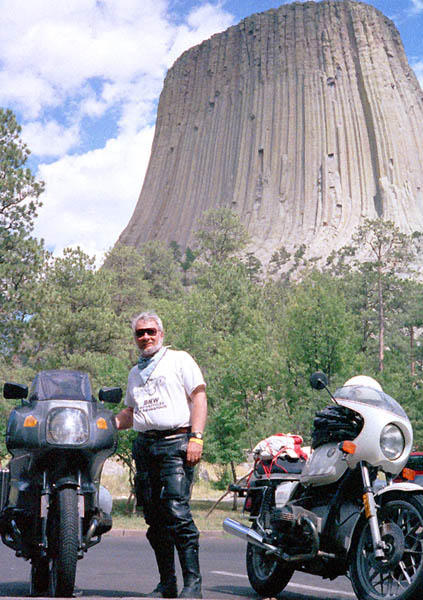
I came across this photo this morning - a flashback to my first real touring BMW and the summer of 1990.
The bike was an '81 BMR R100RS and I bought it used from the former Cycle Werks in Indianapolis in the late summer of 1985 with about 17,000 miles on the odometer. It had sat on the showroom floor for a year or so, apparently waiting for me to decide to buy it. The previous owner had installed an aftermarket tinted windscreen that was tall enough to provide more wind protection but also tall enough to look really stupid and compromise the bike's beautiful lines.
I bought the bike with proceeds from WWII Nazi regalia I'd received from my then-father-in-law. I sold a dress cap for a Third Reich Diplomatic Ministry uniform and the accompanying brocade tunic belt for about $2,000 to a woman in Somerset, Ky., who was a dedicated collector of Third Reich Diplo stuff and had written a reference book on the subject.

I left the too-tall windscreen on the bike through the winter, but replaced it with a stock windscreen the next spring.
At the time, I had three other motorcycles in my garage: My first, a 1977 Kawasaki KE175 dual-purpose two-stroke, a 1978 Kawasaki KZ650 and my inaugural BMW, a '71 R50/5. The R50/5 was a fine machine for one-up riding as long as you weren't in much of a hurry. It had classic lines and looked the part of an elegant gentleman's motorcycle.
But the R100RS was the obvious next step for me, since my tastes were beginning to run toward sport touring. I still think it's one of the most beautiful motorcycles ever designed.
This was the bike that opened up the world of long-distance touring for me. The following July, it took me on a three-week ride to the BMW Motorcycle Owners of America National Rally at Laguna Seca race course near Monterey, Calif. I rode out with BMW Club friends Tim and Linda Balough and can remember with remarkable clarity every road we took and every overnight stop. It was truly a transformational experience.
That autumn, I rode it to New Orleans and Baton Rouge and rekindled a relationship with a woman I'd known since 1966. It was the beginning of a cycle of turmoil that would eventually destroy my marriage and leave the taste of ashes in my mouth for a long time after. I haven't blogged about that pivotal episode in my life, but I probably should.
At any rate, I rode the RS to Colorado every summer from 86 to 90 and it took me to BMWMOA national rallies in Madison, Ind., and Rapid City, S.D.
It was during the 'MOA rally at Rapid City in 1990 that this photo was taken during a day ride with friends to Devil's Tower. After the rally, we rode down to Breckenridge, Colo., where we spent our traditional Indianapolis BMW Club Colorado Week riding the Rockies.

I parted company with the RS and the rest of my fleet of motorcycles - it was costing a lot in insurance and excise taxes to maintain a bunch of bikes I wasn't riding - the following June when I got seduced by a pearl silver 1991 BMW K100RS.
I had 80,000 on the odometer of the gray RS by the time I sold it to a young fire fighter for $1,900.
I saw it a couple of years ago sitting outside the service department of Revard BMW Motorcycles in Indianapolis. It had about 100,000 miles on the odometer and had not been treated kindly. The windscreen had been partially cut away with a Saws-all, leaving a jagged edge. The fairing showed scrapes and scars from crashes.
But I knew it was my old bike because of the aftermarket stuff - the heated handgrips, the oven-thermometer oil temperature gauge, the Reynolds Ride-off centerstand and the mudflaps. I toyed with the idea of buying it back and restoring it, but it just didn't feel right. I concluded that whatever karma I had with the bike had been worked through and I should let it go.
Even so, I have lots of fond memories of what this motorcycle did for my personal development and this Devil's Tower shot underscores one of them.

Sunday, October 09, 2005

Motorcycle therapy

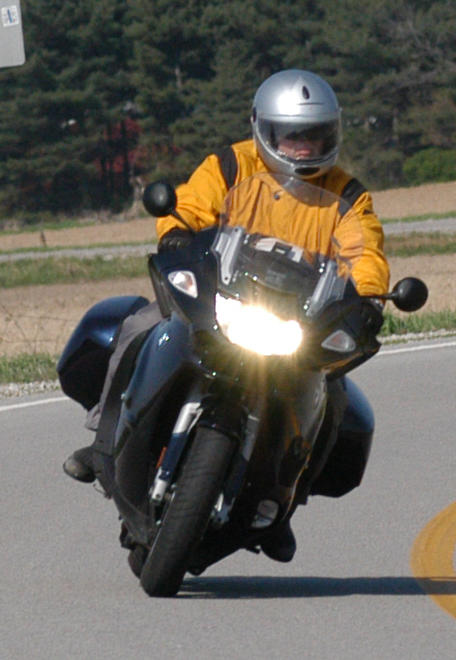
Even though I didn't make it to the BMW RA rally in Tennessee this weekend, I got in a little motorcycle therapy this afternoon.
My wife was stuck writing a couple of stories for her newspaper and I was hanging out in our home office keeping her company when she observed that it was a beautiful, sunny fall day and I should go for a ride.
Sounded like a splendid idea.
So I suited up, put in my in-ear monitors and plugged into my XM satellite radio Roady and hit the road.
I ended up doing a 103-mile look through west central Indiana - almost as far as the Illinois border.
It was great to get out and blow out the cobwebs, even though I really should have been doing yardwork or getting organized to paint the front porch.
Other than a short romp on I-74 from one exit to the next, I did the entire ride on secondary roads, which I had pretty much to myself. It was also a perfect day for harvesting and I saw dozens of farmers out combining soybeans. A couple of them returned my waves.
I left home about 1:45 p.m. and returned about 3:30 p.m., so I guess I made fairly good time for being on backroads.

Saturday, October 08, 2005

Gander Mountain

Maria likes the Arctic Cat 4-wheelers at Gander Mountain.

Barnes & Noble

Interesting. I just sent a photo from the camera program of my Treo 600 and ran into a character limit on the text accompanying it. I hope no such limit applies to the e-mail. It appears not.
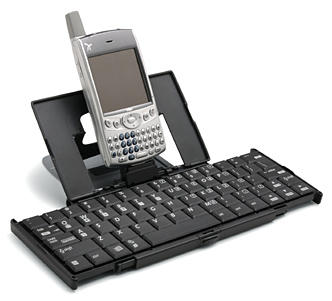
I'm sitting at a Barnes & Noble, with my vente caffe mocha and typing away with my fold-out Treo keyboard, just as if I had my laptop. This is way cool.

--
Sent from my Treo

Caffe Mocha!

While Maria is at her Second Saturday quilt meeting, I'm enjoying my customary vente caffe mocha at Barnes & Noble.

Friday, October 07, 2005

Or not...

Hurricane Tammy kept me home this weekend.
The prospect of rallying in the cold rain in Tennessee just didn't appeal to me, even though I would have had a chance to visit my cousin Sam, who lives in Nashville.
Maybe I'll paint the front porch this weekend.

Tuesday, October 04, 2005

One last road trip

Tennessee is calling me.
Well, it's actually the road and my bike calling and Tennessee is the destination for what may be my last road trip of the year.
The BMW Riders Association's national rally is this weekend in Shelbyville, Tenn. and the weather looks good enough - seasonably cool with no rain in the forecast.
My trip planning software tells me that if I leave at 9 a.m. on Thursday, I'll arrive about 4 p.m. in Shelbyville, but it'll be 5 p.m. there because they're on Eastern Daylight Time.
Several members of my local BMW club are going, but I prefer to ride alone. Group riding is a hassle unless I'm in the lead because I like to use my electronic cruise control. If I'm trying to maintain position in a group of bikes, I have to keep adjusting the cruise setting because of the fluctuations in everyone else's speed.
Riding alone, I can set the cruise on 75 mph or so, punch in a favorite XM Radio station and watch the miles roll by.
This is my first road trip with the new Treo 600 and its keyboard, so I expect to be able to blog from the road. We shall see.
I've been among those earning the club's >10,000-mile award almost every year I've been a member, but I'm going to have to push to make the 10k mark this year. Last time I checked, I was around 6,000 miles since Jan. 1. I've been riding Maria's K75S to commute to her office some 18 miles west of here, mainly to save the tires on my bike for long rides. It also keeps her bike in good running order. We made the mistake of letting it sit idle for several months a couple of years ago and the result was about $750 for rebuilt fuel injectors to replace the ones that were corroded by water condensation in the gas tank.
Even though it's Maria's bike, she hasn't ridden it for nearly two years. The experience of getting hit head-on in our Buick by a blind woman did a number on her confidence. At the same time, other activities competed for her riding time and won.
I'm due for a 12,000-mile service interval on my K1200GT, so I'll book that at the dealership in Savoy, Ill., after I get home from Tennessee.
I've managed to get through most of a year without needing the services of a BMW motorcycle dealership, our local dealer having gone out of business last December. But the bike needs service and I must now contemplate a 100-mile ride to suburban Champaign, Ill. But not until after Tennessee.

Monday, October 03, 2005

A favorite quote

"The job of the newspaper is to comfort the afflicted and afflict the comfortable."

The famous quote is about a hundred years old and can be traced to the work of Finley Peter Dunne, one of the great journalists of the day, who wrote about politics and culture in the voice and persona of an Irishman named "Mr. Dooley."

Sunday, October 02, 2005

Chasing ghosts

I’ve only partially processed the experience of the last two days, so this post will be a bit unfocused.
I spent Friday evening and a good portion of yesterday with about 50 of my Alpha Tau Omega Fraternity brothers. The occasion was the dedication of a new fraternity house at Indiana State University at Terre Haute. It’s the first purpose-built fraternity house in the school’s history and stands conveniently at the north edge of the campus. The old house was what passed for a mansion 110 years ago in Terre Haute in heavily treed neighborhood about a mile south of the campus. When I was a student, it was part of a “fraternity row,” of sorts. Tau Kappa Epsilon was next door to the south, Lambda Chi Alpha was a couple of doors north and Theta Chi was across the street.
Over the subsequent 40-plus years, the old house managed to outlive its usefulness. It was too small, too costly to heat, too expensive to maintain and too far from campus.
The chapter was chartered in 1963, so it’s taken four decades to grow an alumni base with the wherewithal to raise $1.3 million for a new house.
I signed up for the Dedication Weekend activities in the hope of catching up with a lot of old friends. Other than being on hand for a significant event in the chapter’s history and providing a photographic record of it, I might as well have stayed home.
With the exception of one guy, none of my old friends – and no one from my pledge class – showed up.
Maria came along and was an astonishingly good sport throughout.
As I looked around me at the dedication banquet last night, it occurred to me that I was in a room full of millionaires. Considering that I’m halfway there, on paper at least, being worth $1 million isn’t that big of a deal for a diligent college grad in his late 50s or older.
Especially for this crowd. When I enrolled at Indiana State, it was called Indiana State College – a transitional name the school bore for only a couple of years as it ramped up from Indiana State Teachers College to Indiana State University.
So a lot of the guys in my fraternity, the newest and most vital on campus at the time, were there to become educators and most of the others were business majors. Now that I think of it, I only remember one music major, no writers and no artists.
During my era, at least, Zeta Omicron of Alpha Tau Omega was cranking out ambitious, serious young men who were prepared to work hard and achieve the American Dream.
I, on the other hand, was the poster boy for underachievement. I set the record for SAT scores at my high school, had a state scholarship and a projected graduating GPA of 4.0.
But I found too much at Indiana State to interest me outside of the classroom – hanging with friends, learning everything there was to know about the student newspaper, drinking and carousing… While I was flunking out twice and dragging down the chapter cumulative GPA, ZO had the best GPA of any fraternity on campus and was the top ATO chapter in the nation academically.

While I was way out of tune with the fraternity’s academic life, I gloried in the pranks, road trips and drunken revelry that constituted the male bonding social side of the coin.
This was the early ‘60s Animal House Period for American college fraternities and I recognized myself and a lot of my friends in the movie.
So I guess that’s the ghost I was chasing when I sent in my reservation for the Dedication Weekend festivities.
I’d also hoped the weekend would give Maria, who was born the year I pledged ATO, some insights into my personal history.
Nope.
We found ourselves in the company of friendly strangers with whom we had very little in common.
The guys I would have enjoyed seeing are either disconnected from the fraternity or disconnected from life, i.e. dead.
Like Jerry Chud, a brilliant happy-go-lucky vagabond who was in grad school in Missoula, Mont., when he saw a note on a bulletin board advertising an opening for a high school music teacher in Selawik, Alaska. Selawik is a tiny Eskimo village situated where the Arctic Circle crosses the Alaskan coastline. Jerry took the job, taught himself to play all of the band instruments and had a successful life as an Alaskan music educator until a brain tumor took his life in the mid-1990s.
Like Jan Eglen, a brilliant guy who gave up his goal of following in his physician father’s footsteps when he encountered his first med school cadaver. He went on to found a hovercraft company, have a practice as a psychologist and launch several internet businesses. He was also my best man at my first wedding, but I have never held that against him.
Like Oz Morgan, who gave up trying to teach English to junior high school kids after about three years and went into banking. He’s president of a medium-size bank now and we get together every few years.
Like Jim White, a high school track star who majored in math and graduated from ISU with a 4.0, only to piss it all away on drugs and debauchery starting with the 1967 Summer of Love in San Francisco. The last time I heard from him, he was homeless and living on the beach at Ft. Myers, Fla.
Like Bill Broadstreet, a trumpet-playing music major who went on to become a music teacher in the Indianapolis Public Schools system. Bill followed in his alcoholic father’s footsteps and died about 10 years ago.
And like Reed McCormick, who graduated from Delphi High School two years ahead of me and was a pivotal influence in my pledging ATO. Reed, for years a respected educator – most recently at a charter school in Arizona – was an absolute wild man in college.
Sure, it was great to see the new house and meet some of the current crop of Zeta Omicron guys. And it was interesting to see how the ISU campus has morphed into something barely recognizable as the college campus of my misspent youth.
The purpose of the weekend was to thank those who made the new house happen and to formally transfer it to the care of a new generation and the organizers did it well. I’m glad I was there to see it.
But I was mostly politely bored.

Tuesday, September 27, 2005

Illegitimate son of my alma mater

I'm returning to the scene of my meteoric college career this weekend for the dedication of my fraternity's new house. And, while I'm eager to see my brothers from that period, I have mixed feelings about visiting the Indiana State University campus.
In case you missed the pertinent earlier posts, I flunked out twice and never earned a degree. Despite the fact that I had a state scholarship and the top SAT scores in my high school.
It's like Bob Dylan says in the new Martin Scorsese film biography: "I was enrolled, but I just didn't go to class."
I managed to eke out five semesters of ever lower grades as I pursued my own course of independent studies, years before the folks in charge of the school ever thought of it. I spent most of my energies on my work at the student newspaper. I couldn't be bothered with going to class - I had a newspaper to get out.
Fortunately, I was on a career path that - at that time, anyway, didn't put much stock in college degrees.
Sadly, that's not true today. The Gannett newspapers, at least the one I fled five years ago, required a degree and X number of years' experience on a medium-size daily, as criteria for hiring.
So why is the paper written so poorly and so full of mistakes?
With only one or two exceptions, all of the good writers I've known were without degree.
My point is that when it comes to creativity and general competence as a writer, a degree is pretty much meaningless.
As support for my thesis, I offer this list of academic failures and no-shows who would be dismissed out of hand if they applied for a reporter's position at The Indianapolis Star:
James Baldwin
Ambrose Bierce
Erskine Caldwell
Truman Capote
Agatha Christie
Samuel Langhorne Clemens (Mark Twain)
Joseph Conrad
Theodore Dreiser
William Faulkner
F. Scott Fitzgerald
Dashiell Hammett
Ben Hecht
Ernest Hemingway
William Sydney Porter (O. Henry)
Jack Kerouac
Jack London
Henry Miller
Dorothy Parker
Edgar Allan Poe
Geneva Grace Stratton (Gene Stratton Porter)
William Saroyan
Mickey Spillane
John Steinbeck
Dylan Thomas
Hunter S. Thompson
Leon Uris

Getting serious


The fold-out keyboard for my Treo 600 arrived today, along with an adapter plug that lets me use my Walkman headphones to listen to MP3s on the Treo.
This really is turning into a do-everything device that's light years ahead of the Treo 300 I used for about a year.

Now that I have the full-size portable keyboard and the new go.blogger.com mobile connection, I'm good to go for motorcycle trip blogging, illustrated with the built-in camera. Ok, so it's just barely a camera. You should see the low-res black & white Logitech digital camera I paid $700 for back in about 1992. This is a freaking Hasselblad compared with that primitive piece of crap.
Here's a photo of my mother and my son Sean taken with the Logitech museum piece back around 1993. Mom died five years ago next week. Sean's first wedding anniversary was today.

On the fly...

This is a test post using the new mobile blogger link


A test blog entry from my wife's newspaper office. I'm wearing my BMW Savanna motorcyle jacket because they had the AC cranked to arctic levels.

Testing, testing, testing...

Test transmission


Me, looking deranged in a Treo camera self-portrait from the driver's seat of my del Sol.

Friday, September 23, 2005

An anniversary

Forty years ago today, I raised my right hand in the Indianapolis Armed Forces Induction Center, along with maybe 50 other guys, and took the oath of enlistment in the U.S. Air Force.
I had lost my student deferment and faced with the prospect of being drafted for the Army or the U.S. Marine Corps. That scenario almost certainly assured I'd be fed into the meatgrinder that the Vietnam War had become.
So, recognizing that the Air Force has no infantry, I reckoned my best chance of surviving this unfortunate episode in our nation's history was to wear Air Force blue for the next four years.
As it turned out, I was back home with a medical discharge (allergies) in a scant 41 days.
I didn't hide out in the National Guard or flee to Canada or declare myself a conscientious objector.
I'm neither proud nor ashamed. I played the game by the rules. I rolled the dice and I won.
But I have an undying admiration and respect for those of my generation who did go, especially the young men and women whose names are inscribed in the Vietnam Veterans Memorial in Washington, D.C.
One of their most valuable legacies, in my judgment, is today's all-volunteer professional armed forces.
The politicians learned it is political suicide to squander the nation's conscripted youth on a limited war.
Today, we have fielded the finest fighting force the world has ever known. They are exactly where they should be, serving as a magnet to draw the world's most dangerous Islamist terrorists into combat in Iraq, rather than on our shores. And poised to meet the next threats to our security from Iran and North Korea.
The lesson they died for was simply: 1. Take only those who aspire to the profession of arms and 2. Fight to win.
o

Wednesday, September 21, 2005

Hey, I can see my house from here!


Google's mapping site is getting better and better.
They've incorporated aerial photography/satellite imaging into maps.google.com. Not all locations are covered - you get maps only if you check out Breckenridge, Colo. and environs - but a remarkable portion of the U.S. is available, including my little town.
That's my house under the red X, down at the east end of Mills Street.
Just over the treeline east of my house is the local Farm Bureau Co-op with its prodigious supply of anhydrous ammonia and fleet of nurse tanks.
That's where a methamphetamine maker left a valve open and flooded the neighborhood with ammonia vapors, forcing the crowd at a baseball game (in the park southwest of my house) to disperse.
The big complex of buildings on the south side of Mills is the local elementary school.

Wednesday, September 14, 2005

Time for an upgrade


I bought a Handspring Treo 300 smartphone on Ebay about a year ago and quickly became a smartphone devotee.
I congratulated myself for getting in so cheaply - about $70, I think - by buying what amounted to a two-year-old (obsolete) model.
Now, after a year's good service, the old Treo 300 isn't holding a charge very well and I decided it was time to retire it in favor of the next model up - still one model behind the cutting edge and soon to be two back from the front.
The Treo 600 was the top of the Handspring food chain when I came aboard in August 2004. It was supplanted a few months later by the Treo 650. Now there's word of a forthcoming Treo 670 and beyond that, the Treo 700.
Whatever.
The 300 was a better PDA than it was a phone and I was in constant fear that the flip-up clamshell cover, which held the phone's earpiece, would break a hinge. They're notorious for that and I figured it was just a matter of time before it happened. But it turned out that the battery was the real Achilles heel for me.
The last straw was a couple of weeks ago when the battery crapped out on me in Woodland Park, Colo. as I talked with my dentist at home. I discovered a crown adrift in my mouth while eating at a Mexican restaurant and phoned Dr. Stegemiller for advice. Fortunately, one of my riding companions was able to hook me up with a dentist in Fairplay, Colo., who had it glued back in place within two hours of the dental failure.
But it soured me on the 300. When I got home, I installed a replacement battery, but it didn't work right and I started looking on Ebay for a good deal on a 600. I found one and snagged it for less than $200. It arrived today and, while it's not the top of the line, it's light years ahead of the 300.
It has a camera, more memory, accepts SD memory cards and I can attach a folding fullsize keyboard to it for more efficient blogging on the road.
I figure I can enjoy the fruits of techology quite cheaply if I'm content to have last year's model.

Sunday, September 11, 2005

A glance at the rear-view mirror of my life

60 Years Ago Today
I was 8 weeks old. I weighed 10 pounds 6 ounces and was 21" tall, according to my mother's record keeping in my baby book.

50 Years Ago Today
I had just started the fifth grade in Mrs. Carigan's class at Monroe Street Elementary School in Delphi, Ind. The desks were the old row-style where the back of one desk supported the front of the one behind it. They were impossibly old, had hinged lid writing surfaces and a hole for an inkwell in the upper right corner.

40 Years Ago Today
I had flunked out of Indiana State University at the end of my sophomore year and had been working all summer at the RCA TV and stereo cabinet factory in Monticello, Ind. Having lost my student deferment from the draft at a time when Vietnam was heating up, military service was inevitable. Consequenty, I enlisted in the U.S. Air Force as a way of preserving at least some measure of control over my destiny. After all, the Air Force didn't have an infantry and that fact alone made it unlikely that I'd get thrown into combat. I was 13 days away from my date with the Armed Forced Induction Center in Indianapolis and I was resigned to spending the next four years in uniform.

30 Years Ago Today
I had been married eight years and had two sons - aged 7 and 4. I had nine years of newspaper work behind me and was a reporter on the state/suburban desk of the largest evening daily in the state. I had a mortgage, was driving a green 1971 VW Karmann Ghia convertible and was smoking three packs of Viceroy cigarettes a day.

20 Years Ago Today
I had just bought my fourth motorcycle - a graphite gray 1981 BMW R100RS, which was my first real sport touring motorcycle and the one that introduced me to the pleasures of transcontinental rides. I had quit smoking and was in my third year as an instructor with the Motorcycle Safety Foundation, as well as my 19th year with the newspaper. I had been running a suburban bureau, covering the fastest-growing area of the state since March of that year.

10 Years Ago Today
I was nearly two years divorced and was involved in a pointless long-distance relationship with a woman in Sayville, NY, who I had met on American Online. I was living in a two-bedroom apartment and was eight days from the merger of my paper and its sister morning daily - a development that meant I was folded into a larger suburban bureau representing both papers. I was driving a black '94 Honda del Sol and my motorcycle was a pearl silver '91 BMW K100RS which I'd already put about 70,000 mile on. I eventually reitred it at 160,000 miles.

5 Years Ago Today
I had just completed my 15th Annual Mid-Life Crisis Tour - a three-week, 6,086-mile motorcycle jaunt on my K100RS and was back at work in the suburban news bureau, hoping the new owners of the paper would offer senior staffers like myself an early retirement package. I was living in a condominium and was managing my mother's affairs after my then-girlfriend, now-wife, Maria and I were forced to move her out of the home she shared with my father since 1953 and into a retirement/nursing home. None of us realized, on this day in 2000, that my mother had less than a month to live.

1 Year Ago Today
I rode my newish '03 BMW K1200GT to Saturday morning breakfast with my BMW Club friends and Maria went to her Second Saturday quilting meeting.

Today
Maria and I drove home from a delightful overnight visit with my son Steve, his wife Nicky and our granddaughter Lisa in Cincinnati. We're driving an '03 Subaru Forester, but I still have the del Sol, which is running fine after 11 years and 180,000 miles.

Friday, September 09, 2005

Something more to worry about...

I found this cheery post over on MemoryBlog.
It discusses the horrifying prospect of any number of horrible diseases escaping from New Orleans area biological research labs.


Infectious Disease Research in and Around New Orleans
Summary: At the very least, there are two Level-3 biolabs in New Orleans and a cluster of three in nearby Covington. They have been working with anthrax, mousepox, HIV, plague, etc. There are surely other labs in the city.


Here's a great tip for all reporters looking for a completely new - and extremely important - angle on the situation in New Orleans. As far as I can tell, no one has yet mentioned the biological research labs located in and around NOLA. For example, in nearby Covington, Tulane University runs the Tulane National Primate Research Center, a cluster of Level-3 biological labs containing around 5,000 monkeys, most of which are housed in outdoor cages. According to an article in Tulane University Magazine, "The primary areas of focus today at the Tulane National Primate Research Center are infectious diseases, including biodefense related work, gene therapy, reproductive biology and neuroscience. The Tulane primate center is playing a key role in the federal strategic plan for biodefense research."

So what happened to these diseased monkeys living outside in cages? Granted, Covington didn't get hit nearly as hard as NOLA, but it still got hit.

According to the Sunshine Project, which digs up grant proposals and other primary documents from the US biowarfare effort, "Tulane scientists are working with anthrax, plague, and other biological weapons agents." [read more]

And how much of this kind of research was going on within New Orleans itself? Apparently quite a bit.

-- Louisiana State University’s Medical School has a Level-3 biolab in the Clinical Sciences Research Building located at 533 Bolivar Street. According to grant applications, LSU’s facility was the site of research involving anthrax and genetically-engineered mousepox. And that’s just what we know about.

-- The State of Louisiana has a Level-3 biolab in New Orleans.

-- It seems highly likely that an institution the size of Tulane has biolabs in New Orleans itself, not just Covington.

-- Then there’s the University of New Orleans, Loyola University, Xavier University of Lousiana, and others. I don’t know whether they’ve been engaged in bioresearch or have high-level biolabs, but it’d be worth finding out.

-- And let’s not forget the New Orleans Medical Complex, which contains over 40 blocks of hospitals and biomedical research facilities. According to this website, it’s been severely flooded.

So with all the known and probable Level-3 biolabs in and around New Orleans, what's happened to the infected animals? Are they free and roaming? Are they dead, with their diseased bodies floating in the flood waters? And what about the cultures and vials of the diseases? Are they still secure? Are they being stolen? Were they washed away, now forming part of the toxic soup that coats the city?

And take a look at this. The Centers for Disease Control and Prevention (CDC) has a “Select Agents Program” for any facility that handles highly dangerous germs, including Ebola, Marburg, ricin, avian flu, and anthrax. At the top of their website is the following notice:
----------------------------------
Announcement for Entities Impacted by Hurricane Katrina

Entities that are registered with the Select Agent Program who have been impacted by Hurricane Katrina may contact the CDC Select Agent Program for guidance on actions that should be taken to transfer Select Agents to another registered entity or report the theft, loss, or release of select agents that might have occurred due to storm damage. The CDC Select Agent Program will expedite any special requests from registered entities as a result of Hurricane Katrina. Contact the Program via email at lrsat@cdc.gov, phone at 404-498-2255, fax at 404-498-2265, or call your designated CDC representative.
----------------------------------


I encourage journalists to pursue these worthwhile questions. Edward Hammond of the Sunshine Project helped greatly with this post, and if reporters would like some more background on this, they should contact him here.


Thanks to NE for the initial tip.

Tuesday, September 06, 2005

Very politically incorrect generalizations

Did you ever notice that whenever black people feel uncomfortable, they play the race card?
Did you notice that most of the New Orleans rescue footage was white people rescuing black people?
Last week, we saw government moving slower than we would have liked. What's new about that? That's how government works.

Friday, September 02, 2005

Live from New Orleans, it's Friday morning...

Once again, blogging citizens reporting from places where the TV news celebrities fear to tread: http://www.livejournal.com/users/interdictor/

Some observations from 10,500 feet

I've spent an inordinate amount of time watching the Katrina Show this week - time I should have spent riding my motorcycle on my favorite Rocky Mountain roads here in the Colorado high country.
My hosts and their other guests don't share my fascination with what's happening on the Gulf Coast, most likely because they aren't in the news-gathering business.
I think the coverage has been pretty good, although there have been a lot of stupid and inane things said by the folks at CNN and FOX and the major networks, but that's mostly a consequence of having to maintain a running commentary with limited information.
I'm not particularly surprised at the anarchy in New Orleans and elsewhere. All of the intelligent and productive people got out of town when the evacuation orders came down and it became obvious that it was too dangerous to stay. So what we were left with were the uneducated poor and a hard core of dirtbags who may have remained in anticipation of a looting opportunity. And, of course, those desperately unfortunate people who were stuck in hospitals.
So when the flooding started, we had a situation where government agencies had to divert critical resources to snatching people from rooftops - people who should have gotten the hell out of town in the first place - rather than put all of their efforts into stemming the rising waters.
The fact that armed looters and other dirtbags are now shooting at rescue helicopters concerns me because they will have to be dealt with harshly - possibly by sending in battle-hardened Iraq vets who are not novices to urban warfare. TV images of looters getting wasted will not play well in other urban black communities because most of the looters are black. I'm sure this is a troubling fact to TV news producers who are trying to be politically correct and are searching the camera footage in vain for images of white looters. There are, unfortunately, plenty of blacks around the country who are eager to sieze on such images as evidence of organized racisim and stirr up riots similar to those that followed the Rodney King incident as well as the Watts and Patterson, N.J., riots of the mid-1960s.
There are plenty of people in this country who think class warfare would be a good thing and New Orleans could be the catalyst.
On the subject of gas prices and availability, I see the prospect of a return to the dreaded national 55 mph speed limit as a fuel conservation measure. Just when my home state finally bumped the speed limit on rural interstate highways to 70 mph - the point where it stood before the fuel crisis of the 1970s.

Tuesday, August 30, 2005

Report from 10,500 feet

I'm starting to feel like I'm on vacation.
I left Saturday morning with four BMW club friends. Rather than take I-70 west to Colorado, we opted to pick up U.S. 36 at Hannibal, Mo. and follow it to eastern Colorado. We made about 700 miles before calling it quits shortly after sundown in Smith Center, Kans. It rained overnight but was clear when we rolled out about 7 a.m. Sunday. We rode 40 miles before we found anyone to pass, so empty was the road on a Sunday morning.
We picked up the hated I-70 at Byers, Colo. and made quick work of the last 100 miles or so to our friends Tim and Linda's place at Alma.
Yesterday was consumed with trying to adjust to the altitude and running a few errands capped by a viewing of Kevin Costner's Open Range on DVD.
Today, we set out around 8:30 a.m. and rode Cottonwood and Independence passes, coming home by way of Leadville, I-70, Frisco and Breckenridge.
Our riding group consisted of 13 people on a dozen bikes and I was quickly reminded that I have lost my taste for riding in large groups. The blast up Cottonwood Pass was done at speeds in excess of 70 mph, despite the fact that the posted speed limit was 30 mph and the road is lined with horseback riding facilities and campgrounds, plus the occasional bicyclist. Everyone else seemed to enjoy the romp, but it scared the hell out of me and I opted to ride at the back of the pack the rest of the day. I didn't feel completely comfortable until I was riding solo back from Leadville.
Now that I'm back at the chalet and the bike is unloaded, I'm prepared to kick back with a tumbler of Cutty Sark and ice and watch the mounting chaos in New Orleans.
God help those poor fools who didn't evacuate.

Thursday, August 25, 2005

On the road again

The 20th Annual Mid-Life Crisis Tour is on.
I rendezvous with a group of BMW motorcycle friends at a nearby interstate interchange at 6:30 a.m. Saturday and we're off to Alma, Colo. for a week of riding in the Rockies.
If conditions are favorable, i.e., no crises at home, I plan to make a run for Big Sur the day after Labor Day. My itinerary does not include my son's place in Portland this trip because he and his wife may be out of town on business.
I will, of course, blog when possible.

Progress

I got Maria set up with a new computer yesterday. I spent the afternoon hooking up peripherals, transferring the Adaptec SCSI card that runs her aging flatbed scanner and negative scanner, installing software and rescuing data from the two hard drives in her old machine. In the process, it occurred to me that I've learned a considerable amount about computers since I bought my first one in 1991. I paid about $2,400 for that machine. If memory serves, it had 4MB of RAM and maybe a 60MB hard drive and maybe a 16k modem, with Windows 3.0. It used two sizes of floppy discs.
I just used the calculator on the Bureau of Labor Statistics website and determined that, adjusted for inflation, that $2,400 had the buying power of $3,443.17 in today's dollars.
The package I bought yesterday at Best Buy - 1GB of RAM, 200GB hard drive, two CD/DVD drives - one of them a CD/DVD burner - a built-in memory card (CompactFlash, Memory Stick, SD, etc.) reader, 15" flatscreen monitor, speakers, an inkjet printer, and Windows XP - cost me (after rebates) $650.
So what it took to buy a piece of crap computer in 1991 will buy five vastly superior machines today, with a couple of hundred dollars left over.

Wednesday, August 24, 2005

Gateway to Hell

Maria's 6-year-old Gateway computer shut down sometime early this week and resisted attempts to re-start it with the start button. I checked the power cord and it was connected on both ends and plugged into an active power strip.
This morning, on an impulse, I moved the power cord plug to a different connection point on the power strip and, voila!, it started up. About 30 minutes later, Maria noticed the smell of something very hot and maybe burning. We traced it to her computer and yanked the plug.
Since she lived through a barn fire at her farm during her first marriage, she is very fearful of fires and says she no longer has confidence that the computer won't torch the house. It's been upgraded once to handle Windows XP and has been running very slowly lately because her son made a point of loading every conceivable game on it and using it to surf zillions of porn sites. Being the ADD/HD poster boy, he also had a habit of clicking on-screen buttons without reading the accompanying text, which caused myriad process interruptions and nasty challenges to the software and hardware. So I'm inclined to get a new computer.
I checked with my computer mentor Colorado Tim and he confirmed my belief that the eMachines Desktop with AMD Athlon™ 64 Processor 3400+ that Best Buy is selling for $650 is a good solution. It will give her 1GB of RAM and a 200GB hard drive.
I doubt that either of her hard drives is damaged, so I should be able to rescue the data from the smaller one and install the larger as a backup drive on the new machine.
This is all happening, of course, because I recently claimed about $3,800 worth of stock that was overlooked from my mother's estate. First it was an unexpected bill for the stepson's trade school tuition, then a $1,200 dental bill for a failed bridge and now another $650+tax for a new computer.
This has been a karmic reality all of my adult life - whenever extra money shows up, it is quickly followed by enough unexpected expenses to claim most or all of it.

Monday, August 22, 2005

Steak n' Snake

Got this tale of woe from some friends over the weekend. It's always good to pay attention when credit cards are involved:
We had a bad experience Friday. Yesterday 5/3rd bank called and said there
was excessive use on our bank account. We found out that a girl working the
drive-up window at the Steak N' Shake at 5400 N. Keystone had switched
Nancy's debit card for a blank gift card. When she handed Nancy the
receipt, it was wrapped tightly around what she thought was her debit card.
She then started handing Nancy the food so she would just put her card back
in her purse without looking at it.
The next day the girl went apeshit with it and so far has racked up about a thousand dollars in charges. The bank is going to replace the money. We wouldn't have known how it got away from Nancy except that she still had the card wrapped in the receipt. When she went to verify that she still had her card, she discovered the substitute.
We have to file a police report today since the amount makes it a felony.
Needless to say, Nancy is highly upset. Verify that you have your debit
card when you get it back, wherever you use it. Valerie said the rule is at
Steak N' Shake that they hand you your card and your receipt separately.

Saturday, August 20, 2005

Charlie & Martha


Charlie and Martha Thomas, circa 1940
Charlie Thomas was an early member of the Indianapolis BMW (Motorcycle) Club.
The club was founded as an all-male organization back in the early 1960s. The guys would go off on day rides and long trips together and once a year, on the Saturday night before or on Valentine's Day, they put on a banquet to thank their wives for letting them go riding.
Charlie was married to Martha. He took her for her first motorcycle ride the day she turned 20 back in 1939. Martha was reluctant to go until her mother said, "If you don't go for a ride with him, I will."
"My folks could hear me screaming for a block after we pulled away," Martha recalled years later.
By the time they returned more than an hour later, Martha had calmed down and was enjoying herself.
And so the courtship continued and they were married before Charlie went into the Navy at the start of World War II. He'd had two or three Harley-Davidsons by then, but sold his last bike before enlisting.
After the war, they set up housekeeping in Indianapolis and raised a son and three daughters. Charlie got back into motorcycling and they rode whenever they could.
Charlie loved having Martha on the pillion seat as much as she loved being there.
So when Charlie showed up for a BMW Club ride with Martha aboard - a clear violation of the men-only rule - he let it be known that if they wanted him along, Martha was part of the deal.
That was the end of the guys-only arrangement. Pretty soon, all of the guys were bringing along wives and girlfriends - presumably not at the same time. It was only a matter of time before some of the women got their own bikes. By my unofficial count, the club has had three women presidents and it's a rare club ride that doesn't include a woman, either as a rider or a passenger.
By the 1990s, Charlie wasn't riding much. But that didn't stop him and Martha from attenting every montly club meeting or traveling hundreds - sometimes thousands - of miles to the annual BMW Motorcycle Owners of America national rally.
In fact, Charlie was a grand prize winner at the 1994 BMW MOA rally in Oshkosh, Wisc., claiming a brand new blue BMW K75LT.
Charlie died in January, 2000, at the age of 83.
Martha was desolate, but she pulled through and continued to be the club historian, statistician and all-around inspiration.
She bought one of the first Chrysler PT Cruisers when they first came out and let her grandkids stick magnetized flames on the sides. She was always around and she was always upbeat and cool. She took computer lessons so she could e-mail her grandkids.
She only let a few people know last June when she was diagnosed with colon cancer. Those of us who did know, fully expected her to beat it.
So it was like a body blow Aug. 9 when she died.
The club turned out in force at the funeral home visitation and her family was deeply touched at how much we cared about Martha and considered her a second mother to us all.
We offered a motorcycle escort to the cemetery and were grateful when the family enthusiastically accepted.
Consequently, a week ago yesterday about 30 of us gathered at Little Flower Catholic Church on the eastside of Indianapolis. I had the honor of riding the second bike in the procession that totaled 16 motorcycles as we preceded the hearse down the leafy streets of her old neighborhood and on to a southside Catholic cemetery.
This was no rolling thunder Harley-Davidson loud pipes affair. This was a staggered line of elegantly quiet gleaming autobahn burners with properly attired riders - all helmets, boots and jackets.
We learned later that Martha had requested such a sendoff and we were honored to have made that last ride with her before sending her off to ride into eternity with Charlie.

Friday, August 19, 2005

Bridge out

"Is this a really long dental appointment, or is it just me?" asked my dentist as he prepared to install a temporary bridge in the upper left side of my mouth.
I was well into my second hour in the chair this morning as he worked to replace a four-tooth bridge that he had made for me 17 years ago.
My first clue that something was wrong came after lunch yesterday when I discovered I had what felt like a whole bunch of loose teeth. I got an emergency appointment and was at his office about an hour later, despite the fact that it's about 55 miles from my home to my dentist's office.
He glued things back together to get me through the night and set me up for a 9:10 a.m. appointment today.
My wife, who worked for several years as a dental assistant before she got serious about journalism, tells me I'm very fortunate to have gotten 17 years out of a bridge, saying 10 years is the average life expectancy of one like mine.
His office manager is trying to get the dental lab to put a rush on the ceramic work in hopes of getting it in my mouth before I saddle up for Colorado and points west a week from tomorrow.
If not, I am assured the temporary bridge he put in today will hold up until my return.
The bill? About $2,400, with my wife's dental insurance picking up about half, if we're lucky.

Wednesday, August 17, 2005

Redskins

One of my favorite bloggers had a post today about the NCAA's recent decision to ban college teams with Native American nicknames and/or mascots from post-season tournament play.
Like the Florida Seminoles and a whole bunch of other teams.
This, presumably, is because such references are offensive to Native Americans.
Why, then, is there a sign outside Red Mesa High School at Teec Nos Pos, Ariz. - in the heart of the Navajo Indian Reservation of northeastern Arizona - that proudly proclaims it "The Home of the Redskins?"
Time for the NCAA to get a get a grip and focus on real issues.

Tuesday, August 16, 2005

On the Road Again?


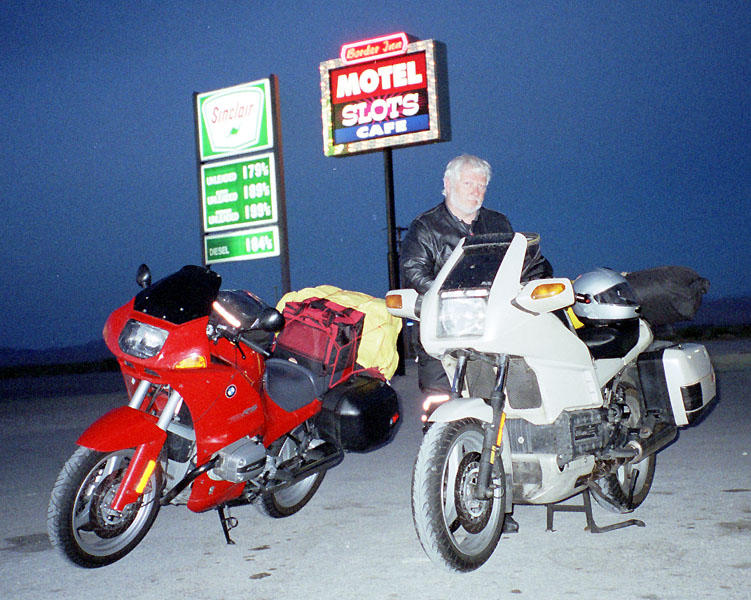
Night falls on a ride from Cañon City, Colo., to Ely, Nev. during my July, 2001, Mid-Life Crisis Tour. The scene is the Border Inn, just west of the Nevada-Utah border.

It looks like my 20th Annual Mid-Life Crisis Tour may happen after all.
Money and time have been in short supply this summer and I had pretty much given up on being able to take my usual three-week motorcycle ride through the West, including a visit to my son in Portland, Ore.
Then my wife got a promotion and a raise and it looks like we're going to get some justice and some payback with her deadbeat ex.
I've been riding my BMW K1200GT sparingly this year, trying to make the current set of tires last as long as possible in case the opportunity for a long ride showed up.
Some of the riding I've done has been on my wife's '94 K75S, which is a good thing since she hasn't felt comfortable about riding a motorcycle in the wake of her car crash in March, 2004. The K75S only has about 5,400 miles on it, despite its age.
I made the costly mistake of letting it sit without fuel stabilizer in the tank over the winter and spring of 2003-04 and ended up having to spend $755.39 to replace corroded fuel injectors.
Both bikes got the standard BMW 6k service just before my local dealer went out of business last December and the K75S has a set of low-profile tires that are less costly to replace than the ones on the K1200GT.
But my combined mileage on both bikes this year is only 2,260 miles - pretty pathetic for this late in the year and a considerable distance from the 10,000 I need by midnight Dec. 31 to qualify for one of my local club's annual 10,000 mile awards. I've earned one every year since 1993 and need a big tour to get to 10k this year.
So when it became apparent that I could be spared for a few weeks, I started thinking about the local BMW club's annual Chalet Week and beyond.
The club has rented lodging in the Colorado Rocky Mountains for a week every summer since the late 1980s. For a lot of years, it was a chalet in Breckenridge that slept about 20. The cost was about $65 per person for a week's lodging, which meant you could hardly afford to stay home.
About four years ago, the Breckenridge chalet's owners decided to make it their permanent home and take it off the vacation market. Happily, that coincided with the retirement of club members Tim and Linda who had purchased a similar retirement home a few miles south in Alma.
Tim and Linda are supremely good hosts and eagerly offered their spacious A-frame home as a base of operations for Chalet Week.
As luck would have it, my change in circumstances this month coincided with the opening of some vacancies in the Chalet Week roster, so I've arranged to buy one of the now-$75 spots from a guy whose wife has developed health problems and plan to spend the week before Labor Day riding in the high country with my BMW friends.
The plan that's coalescing in the back of my mind calls for staying at Tim and Linda's through Labor Day, then making a two-day bullet run for Portland to spend some time with my son and his wife.
Then, time and money permitting, I'd like to swing down through Big Sur before heading east for home.
It's only fitting that Tim and Linda have a role to play in this 20th annual tour, since they were my traveling companions on the first such adventure back in July 1986. I had bought my first serious touring bike - a 1981 BMW R100RS - the previous autumn and was ready to ride to Monterey, Calif. for my first BMW Motorcycle Owners of America national rally.
Tim and Linda were old hands at touring and I was the attentive apprentice. We were all Motorcycle Safety Foundation instructors, so we had the same theoretical understanding of riding, but they had the experience – the Wisdom of the Road – and I determined to learn all I could from them.
The first important thing I learned was how much more comfortable a bike can be at highway speeds when you're wearing earplugs. I rode the first day without earplugs, thinking they were a little silly.
The next day, sometime after lunch and somewhere west of Kansas City, I accepted a pair from Tim and gave them a try. After a first few moments of awkwardness – I worried my balance would be affected, but it wasn't – I realized I could still hear speech and the engine. But the roar of the river of wind around my full-face helmet was muted and subdued and I could hear myself think. I became a convert over the next few hours that afternoon and have carried and used earplugs on every long or fast ride since.
That three-week ride to the BMW MOA national rally at Laguna Seca Racetrack and home again changed my life. Nearly 20 years later, I can still recall every place we stopped and every road we followed.
I remember the thrill of riding up into the mountains west of Denver the afternoon of the third day, effortlessly weaving our way up steep inclines past laboring trucks and cars. My mind flashed back to the line from the Hindu scripture, the Rig Veda: “He moves rapidly following the path of him the much-praised, other goers cannot overtake him though he is moving easily...”
That evening, after settling into motel rooms in Idaho Springs, we rode up to Echo Lake, the jumping-off point for the road up Mount Evans – the highest paved road in the United States. It was my first real taste of mountain riding and I was simultaneously exhilarated and intimidated. I got over being scared, but the exhilaration has never left me.
Lots of moments on that trip became templates for later adventures and benchmarks against which other trips would be measured.
There was the thrill of riding our BMWs as they were meant to be ridden: at autobahn speeds, swallowing up 110 miles of Nevada's U.S. 50 in an hour's time. There was the excitement of racing a thunderstorm across the central Utah desert. And there was the image of a fawn flashing across a forest road in the Sierras behind its mother, pausing to glance at me, then vanishing into the brush. A wispy cloud of dust hung in a shaft of sunlight to mark its passage.
There was the transcendent splendor of the Big Sur coast where the mountains meet the sea in a collision of blues and greens and crashing foam. There was the day trip to San Francisco, climaxed with a ride back around Monterey Bay through fog so thick it seemed like rain.
But the real watershed moment came just after lunch on the seventh day when I parted company with my friends on Lake Tahoe's southwestern shore. They fancied a trip to Yosemite National Park and I was off to visit a longtime friend in Burbank. According to plan, we would rendezvous three days later in Monterey.
We said our good-byes, shook hands and were off. They turned south and I headed west and up and over the Sierras to follow Interstate 5 down the Central Valley to Los Angeles.
It was a supremely liberating experience and, as much as I enjoyed their company and the security of riding with friends, I needed it to grow as a rider and as a person.
I quickly realized, as the road distance between me and my friends widened at a rate of more than 100 miles an hour, that this was what I'd come 2,000 miles to find: The solitude and self-reliance that comes of riding alone and trusting your own knowledge and skill and equipment. As I swept up and over Kit Carson Pass, I felt like a young eagle testing its wings for the first time and I reveled in the experience.
I alone was responsible for choosing a restaurant or a place to stop for the night. If I got off to a late start, it was nobody's fault by mine. Similarly, if I saw six potential photographs in a mile, I could stop for each of them without worrying about inconveniencing a traveling companion. And there were times when I did just that, riding north on the Pacific Coast Highway along the Big Sur coast.
The freedom and responsibility were liberating and set me on a journey that I hope continues for many more years.

Monday, August 15, 2005

Note to Economics majors

Did you know that Federal Reserve Chairman Alan Greenspan studied clarinet at Julliard?
And now he's managing the world's most powerful economy.
Think you might be wasting your time?

57 Channels and Nothin' On

Now that the town government has made good on its promise to remove the three 65-foot-tall maple trees that were menacing the south side of my house, I am able to make good on my decision to dump my overpriced cable TV service in favor of satellite DISH TV.
I tried to get a satellite hookup earlier this year, but gave up after two different installers clambered all over my property and the roof of my house with their little sighting compass gizmos trying to find an unobstructed line of sight to the DISH TV satellite. They concluded it couldn’t be done as long as those three maple trees were there.
The trees came down the second week of July. I waited a discrete interval, so as not to make it look like the only reason I wanted them down was for TV access, and last week ordered the dish.
I opted for the basic service which is guaranteed at $19.99/month for the first year with three months of free HBO and Showtime and the installers set me up last Wednesday afternoon.
We didn’t bother with the phone line connection that is necessary for Pay Per View offerings, but I can see that is coming. I spent yesterday afternoon restoring connections to my RCA home theatre amplifier/tuner that I had to undo so the dish installer could set up his stuff. Because of the layout of our home entertainment center cabinet, there isn’t enough cable or wire slack to pull the various components out far enough to actually see where the various cables connect, so it all had to be done by feel, with the aid of the owner’s manuals for the tuner, DVD player, VHS player, CD player, etc.
I finally got everything working, i.e., playing through the home theatre device and I even got the programmable DISH TV remote set up to run the home theatre volume, but I know my wife is never going to understand how to work this stuff.
When I go on long motorcycle trips, I have to leave detailed instructions on how to work the TV and its ancillary components – none of which she follows.
She’s already complaining about the complexity of the remote and menus on the bedroom TV and the only extra thing that’s connected to it is a DVD player. She’s sure to find the learning curve for more complex downstairs setup completely paralyzing.
As it was, we had an array of five remote controls (TV, DVD, VHS, CD, home theatre) on the coffee table and the simple act of watching TV required the use of three of them – the TV remote to turn on the TV, the home theatre remote to control the volume through the six speakers and the VHS remote to change channels (I had the cable signal running through the VHS tuner so we could tape the occasional program).
Now, the new satellite remote is programmed to turn on the TV and change channels (when the SAT function is chosen) and control the home theatre volume (when the AUX function is chosen, but you have to remember to go back to the SAT function for more channel changing). It’s a little tricky, but at least I’ve got it down to one remote and I think I can program still more component functions as time permits.
Having gone to all of this trouble to presumably enhance our TV experience, I’m reminded of the Bruce Springsteen line of “57 channels and nothin’ on.”
Little seems to have changed with network TV in the 44 years since Federal Communications Commission Chairman Newton Minnow called U.S. television programming a “vast wasteland.”
Here’s the pertinent passage from his speech:
…when television is bad, nothing is worse. I invite you to sit down in front of your television set when your station goes on the air and stay there without a book, magazine, newspaper, profit and-loss sheet or rating book to distract you--and keep your eyes glued to that set until the station signs off. I can assure you that you will observe a vast wasteland.
You will see a procession of game shows, violence, audience-participation shows, formula comedies about totally unbelievable families, blood and thunder, mayhem, violence, sadism, murder, western badmen, western good men, private eyes, gangsters, more violence and cartoons. And, endlessly, commercials--many screaming, cajoling and offending. And most of all, boredom. True, you will see a few things you will enjoy. But they will be very, very few. And if you think I exaggerate, try it.

I took a look at the primetime offerings of the five major networks. (ABC, CBS, NBC, FOX and WB) and compiled this list of shows I have never watched and have no intention of watching:
7th Heaven
8 Simple Rules
According to Jim
Alias
The Amazing Race
American Dad
American Idol
The Bachelor
The Bernie Mac Show
Big Brother
Blue Collar TV
Bones
Boston Legal
Brat Camp
Charmed
Cold Case
Commander in Chief
Complete Savages
Crossing Jordan
CSI: Any of them
The Cut
Desperate Housewives
Everwood
Extreme Makeover
Extreme Makeover: Home Edition
Fear Factor
George Lopez
Grey’s Anatomy
Head Cases
Hell’s Kitchen
Hope & Faith
House
Invasion
Jake In Progress
Jimmy Kimmel Live
Joey
Killer Instinct
The King of Queens
Kitchen Confidential
Las Vegas
Law & Order: Any of them
Less Than Perfect
Living With Fran
Lost
Medium
Meet Mr. Mom
My Kind of Town
My Wife and Kids
Nanny 911
NCIS
Night Stalker
Numb3ers
The OC
The Office
One Tree Hill
Princes of Malibu
Prison Break
Quahog Informant
Reba
Renovate My Family
Reunion
Rock Star: INXS
Rodney
Scrubs
Smallville
Still Standing
So You Think You Can Dance
Stacked
Summerland
Supernanny
Survivor: Guatemala
Teen Choice Awards
Tommy Lee Goes to College
Totally Outrageous Behavior Caught on Tape
Trading Spouses: Meet Your New Mommy
Two and a Half Men
Veronica Mars
The War at Home
What I Like…
Wife Swap
Will & Grace
Without a Trace
Yes, Dear
Hour after hour of escapist crap. Who’s watching that stuff? Obviously there is an audience, but it doesn’t include very many people I know.
About the only thing among the primetime offerings that I do watch with any regularity is The Simpsons and Reno 911. My taste runs to the History Channel, the National Geographic Channel, TLC, A&E and the weather and news channels.
Small wonder that my personal library is very light on fiction.

Monday, August 08, 2005

Not my Friends


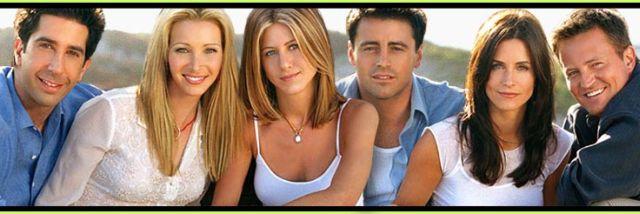
My stepdaughter is obsessed with "Friends."
She owns all of the available full-season DVDs and has the show going pretty much non-stop in her room during her waking hours. Her idea of an evening activity is to persuade her mother to watch an episode or two with her after dinner.
She has today off, so the laugh track of Friends is constantly on the edges of my awareness. I can screen out the dialog, but the laugh track persists like a rock in my shoe.
I watched a few episodes of the show years ago, just to humor her and my wife. It's breezy and clever, but it doesn't appeal to me. The idea of a bunch of bumbling kids learning lessons I learned 40 years ago wears thin very quickly.
On balance, I'm pretty much done with the traditional sitcom and I find a laugh track insulting as hell. I don't need an auditory cue to know when something is funny and, if you pay attention, you'll notice the laugh track thinks everything is funny.
No, these kids are not my friends and they're not even remotely interesting to me.

Saturday, August 06, 2005

Yes, I really do own one of these


Were I not photographing a wedding today, on this 60th anniversary of the atomic bombing of Hiroshima, I would be wearing this t-shirt.

Wednesday, August 03, 2005

45 years of thrashing the keys

On this date in 1960 - yes, 45 years ago today - I had my last typing (it's called keyboarding now) class in summer school. It was the summer between my freshman and sophomore years of high school.
For a guy who ended up making a living pounding a typewriter, and later a computer keyboard, it was an inauspicious beginning.
I arrived late for the first day of class and was assigned a typewriter that didn't have its keys blacked out. That meant I could sneak a peek at the keys and consequently didn't develop the sure-fingered confidence that some of my classmates acquired.
My teacher was a slow-witted guy who also taught history and driver education and was the varsity basketball coach. He's dead now, as are most of my teachers. I can't help it. The just died. It's really not my fault.
Anyhow, I guess I have the late Oscar Mannies Jr. to thank or blame for setting me on the path of a keyboarding writer.
I did get faster, though. Working at a newspaper will do that to you. On a good day, I'm damned fast.

Help a fellow blogger

Kate (don't know her last name), who blogs at www.electricvenom.com, had a disastrous bicycle accident Monday night, losing or damaging several teeth at a time when she had already committed to some very expensive orthodontia.
Here's the short version:

All told, when I hit the handlebars last night, I lost three teeth entirely, chipped two at the tip, and cracked three more from crown to root. The good news: two of the cracked teeth were already scheduled for extraction. The bad news: two of the teeth that got knocked out were to serve as the anchors for my permanent bridges. The even worse news: the other tooth that got knocked out, the two chipped teeth, and the other cracked tooth will all need crowns now, too. (One may possibly need to be extracted as well, but I’m keeping my fingers crossed.)

So, because the teeth which were to serve as anchors for my bridges are now gone, I have to get all-new bridges made — and I didn’t even get to wear the other ones yet! But I can’t get those new bridges made or installed until my injuries heal, so now they also have to make new “flippers” for me.

Meanwhile, I have no front teeth at all on either jaw and, I swear to God, I look like something out of Deliverance. It’s horrible. I can’t bear looking in the mirror — although, considering all the facial bruising I also have, I wouldn’t be looking in it that much anyway.


This is a hideously unpleasant thing to happen to anyone, especially an attractive 37-year-old wife and mother. At the urging of fellow bloggers, she's set up a Paypal account for anyone who would like to ease the financial pain this has inflicted upon her and her husband.
I urge you to visit her site, read her posts and, if you're so inclined, send her some money.

Monday, August 01, 2005

Born to write?

From time to time, I drag out the little 5-year diary I kept during my high school years (well, it actually ran from mid-1959 through Dec. 31, 1963 when I was a college freshman) just to see what I was thinking and doing on this date in my personal history.
It's usually pretty embarrassing - filled with expressions of naivete and trivial concerns.
But on this date in 1962, on the eve of my senior year in high school, I drove to the campus of Purdue University where I took a battery of aptitude tests aimed at narrowing my choices of colleges and college majors.
I was intent on a career in music because that's where I found the most fun in high school. I was in every instrumental and vocal ensemble my small (490-some-student) high school had. I was an undistinguised trumpet and Sousaphone player and a competent singer (bass), but I somehow saw myself pursing a music major.
I also had an interest in psychology, so I figured I'd minor in psych.
So when I took the tests 43 years ago today, I deliberately picked answers I thought would skew the test in that direction.
Consequently, it was no big surprise when the results showed me destined to be a musician.
But guess what came in a strong second, betraying my more truthful responses.
Journalism.
Damn!
I hated writing. At least I thought I did. I detested writing themes in English class and saw the student newspaper - a 4-page mimeographed travesty - as a waste of time.
But I did journal, finding time almost every day for the better part of my most tempestuous 4½ years to scrunch an account of the day into the five short lines allotted for that date.
Once I got to Indiana State College (now Indiana State University) I discovered I was ill-equipped to major in music. I'd had no classes in theory and only a rudimentary music education in high school.
Psychology 101 left me thoroughly disenchanted with the subject, concluding that psychologists were mostly only guessing at causes and effects.
But I soon found myself hanging out with people who worked at The Statesman, the student newspaper. My first real job at the paper carried the lofty title of Wire Editor. That's what they called the guy who daily serviced the Associated Press teletype machine. I kept it fed with rolls of paper and tore the continuous strip of printed paper into stories, hanging them on wall hooks designated "state," "national," "international," "business," "agriculture" and so on.
Before long, I was writing stories - my first by-line was The Statesman's obituary of Edward R. Murrow, considered by most to be the founder of American broadcast journalism.

I wrote a weekly column and had the bad judgment to become production manager at a time when the paper converted from hot type to offset. For several years, The Statesman was printed by a company with facilities just off campus, with real union printers who knew about layout and composition. Changing to offset meant we got to set the type ourselves using a primitive machine called the Varityper. It was a labor-intensive task and the Varityper was a piece of junk that never should have been brought to market.
The result was an all-nighter for every one of the twice-weekly issues during the second semester of my sophomore year. I learned a lot about newspaper production and typography, but I also stopped going to classes and flunked out.
After laying out a semester, during which time I evaded the draft by enlisting in the Air Force, then was blessed with a medical discharge for allergies, I returned to ISU and my old production manager job. Predictably, my sense of duty to the newspaper killed my index. I think my only passing grade that semester was an A in editorial writing.
So the hook was set.
I succumbed to the destiny that was revealed on this date in 1962. I embarked on a newspaper career that I can't seem to shake. Yeah, I walked away from a 34-year job with the state's largest newspaper after the paper I loved was hijacked by morons. But now I'm every bit as involved in the work at Maria's medium-sized daily and I'm still journaling, but now it's called blogging.

Friday, July 29, 2005

"Stupid is as stupid does" - Forrest Gump

This story appeared last Saturday in the Pittsburgh (Pa.) Post-Gazette:

By Tom Barnes, Post-Gazette Harrisburg Bureau

The family of a Marine who was killed in Iraq is furious with Lt. Gov. Catherine Baker Knoll for showing up uninvited at his funeral this week, handing out her business card and then saying "our government" is against the war.


Catherine Baker Knoll
Rhonda Goodrich of Indiana, Pa., said yesterday that a funeral was held Tuesday at a church in Carnegie for her brother-in-law, Staff Sgt. Joseph Goodrich, 32.

She said he "died bravely and courageously in Iraq on July 10, serving his country."

In a phone interview, Goodrich said the funeral service was packed with people "who wanted to tell his family how Joe had impacted their lives."

Then, suddenly, "one uninvited guest made an appearance, Catherine Baker Knoll."

She sat down next to a Goodrich family member and, during the distribution of communion, said, "Who are you?" Then she handed the family member one of her business cards, which Goodrich said she still has.

"Knoll felt this was an appropriate time to campaign and impose her will on us," Goodrich said. "I am amazed and disgusted Knoll finds a Marine funeral a prime place to campaign."

Goodrich said she is positive that Knoll was not invited to the funeral, which was jammed with Marines in dress uniform and police officers, because the fallen Marine had been a policeman in McKeesport and Indiana County.

"Our family deserves an apology," Rhonda Goodrich said. "Here you have a soldier who was killed -- dying for his country -- in a church full of grieving family members and she shows up uninvited. It made a mockery of Joey's death."

What really upset the family, Goodrich said, is that Knoll said, 'I want you to know our government is against this war,' " Goodrich said.

She said she is going to seek an answer from Gov. Ed Rendell's administration if it opposes the fighting in Iraq and Afghanistan.

Knoll was traveling yesterday, away from the Capitol, and couldn't be reached. But an aide said she "extends condolences to all families who have lost loved ones" serving in the military.

Without having talked to her, the aide, who asked not to be named, said, "The family members of fallen soldiers are in our hearts and prayers. Our prayers go out to their loved ones in their hour of grief."

Asked to comment on Goodrich's complaints about Knoll's conduct at the funeral, the aide said that "would be inappropriate."


On Monday, Baker's office released this letter as a form of damage control:

Dear Mrs. Goodrich,

I am writing to further apologize and clarify what happened at the funeral of your beloved husband, Joseph. As a wife and mother, I can only imagine how difficult it must be to lose your spouse so suddenly. As an adored member of your family and one of Pennsylvania’s sons serving with soldiers from across the commonwealth, SSGT Joseph Goodrich, is one of this nation’s heroes.


As I said in my phone message to Rhonda, after I learned through press reports that your family was offended by my attendance, I was incredibly upset. I wanted to assure you once again that my intention was not to add to what must be a tremendously, heartbreaking, difficult period.


The war on terror is an immensely personal conflict for the thousands of people whose families continue to serve with honor, and I have attended dozens of funerals to offer my sympathy and condolences to the families of soldiers who have paid the ultimate sacrifice.


My heart and prayers are with your family, and to the families of all the men and women serving the cause of freedom in the fight against terror. I unfortunately, did not arrive at the church services for SSGT Goodrich’s funeral in time to offer my personal condolences to you. As I also mentioned on Rhonda’s phone message, as I do with many Pennsylvanians I meet, I offered my business card so she could contact me, and as a sign of my willingness to help the family through this difficult time in any way I can. To do anything that was deemed insensitive was completely counter to my intent.


Sergeant Goodrich’s service was beyond the call of duty. If my regard for his family’s grief was seen another way, it is thoroughly regrettable. The fact that you have been offended deserves and receives my most profound apology.


I will continue to support our troops in my role as Lt. Governor and support our President as an American. That I somehow conveyed an impression that was interpreted as other than that will forever be saddening and upsetting to me.

Again, please accept my heartfelt apology and deepest sympathy.


Sincerely,


Catherine Baker Knoll
Lieutenant Governor

Thursday, July 28, 2005

What's on your mind, Ruthie?


Ever wonder what your dog is thinking? Or if he/she is thinking?
I've watched enough episodes of The Dog Whisperer to recognize how often people mistakenly assume their dog has human intelligence, so I don't have any illusions about Ruthie the Wonder Dog delving into higher mathematics or arcane philosophy.
But there is an unmistakable intelligence and a discernible thought process going on in her furry little head.
I've heard it said that a really smart dog is about as intelligent as a 2-year-old child. Maybe so. I do know that Ruthie is the smartest dog I've ever owned, or who has ever owned me.
I was reminded of the fact that she has thoughts about 4 a.m. today when Maria and I awoke to the sounds of her growling and whining in her sleep, apparently in the middle of a rather intense dream. Ruthie rarely sleeps alone. If she isn't on our bedroom carpet, she's in one of the kids' rooms at night.
I can't help wondering what memories and images are running through her mind in moments like that. Is she chasing cats? Rabbits?
When we went to the animal shelter to pick out a dog seven years ago, I took along my laser pointer. I was looking for an alert, responsive dog who took an interest in the little red laser dot. It was my little pocket dog intelligence tester, which may or may not have had any scientific validity.
Ruthie was the only dog in the bunch to show any interest in the laser dot and she went bonkers over it. She also behaved as if she recognized us immediately as her family, almost as if she'd been waiting patiently for us to show up and take her home.
We know nothing of her previous life. The shelter people guessed she was about three or four months old and said she'd been picked up as a stray. More likely, she had run away from her original home, got lost and was picked up by the dog catcher.
At any rate, the laser became her favorite toy.
I can stand on the deck behind our house at night and run her all over the yard in pursuit of the red dot. She'll chase it in tight circles until she gets wobbly from dizziness. She'll chase it up and down stairs until she's ready to drop.
She knows the click of the laser pen clip and will come running from the farthest corners of the house when she hears it. To my ears, it's indistinguishable from any other pen clip, but she knows the difference and ignores all of the others.
She also knows the word "laser." When she hears it, she starts looking around on the floor for the dot.
And while she loves retrieving tennis balls, her next favorite toy is a colorful rubber mallard we bought her for Christmas 2003. It's outlasted every other dog toy we've given her.
We used to give her stuffed dog toys, but she got so good at eviscerating them that she could have the living room floor covered with stuffing 15 minutes after she got her paws and teeth on one of them.
And, of course, she associates it with the word "duck."
One morning recently, Maria was recounting a phone conversation one of her coworkers had in which the newly married young reporter told the apparently disbelieving interviewee that her new surname is, "Dick. Dick! Dick!"
Moments later, Ruthie jumped up on the bed with her duck in her mouth, ready for a game of "pull the duck" or "retrieve the duck."

Wednesday, July 27, 2005

Empty Nest: Three weeks and counting

Maria's daughter goes back to college Aug. 17.
Her son went to live with his father at the end of May.
For the first time in our married life (since May 15, 2001), we will have the house entirely to ourselves.
It will be truly liberating to be able to make plans that include nobody but us. No obligation to accommodate or entertain kids.
Of course, we can't have complete privacy because Maria's mother retired earlier this year and, since we only live about 10 blocks from her, she likes to pop in unannounced. I can't tell you how many times we've been on the verge of intimacy when we heard her car tires crunching down our gravel driveway.
She calls at least once a day, usually to talk to her granddaughter, but often to chat with Maria and sometimes even with me. Now you know why we got Caller ID recently.
If we don't get out of the house early on weekends we can count on calls from my mother-in-law and both of Maria's brothers.
So you see, "empty nest" and "privacy" are relative terms.
Maria comes from a long line of big, close families. Her mother comes from a huge family of Italian immigrants and has the equivalent of an army battalion of aunts, uncles, cousins, nieces and nephews. Maria is the oldest of three kids and they were pretty close growing up in sometimes difficult circumstances so they have a need to keep in touch - at least through Maria. The two brothers - one Amish, the other Kerry Democrat liberal Unitarian - have wildly divergent ideas on citizenship, responsibility and parenting and it often falls to Maria to be the family diplomat, smoothing ruffled feathers over real or imagined affronts.
I, on the other hand, was an only child. All four of my grandparents were dead by the time I was 5 and none of my aunts, uncles or cousins lived in the same town with us. I saw some of them separately maybe every six weeks or so and most of them at the annual family reunion.
For me, "family" meant my parents and me. And after I went off to college and later got married and lived 60 miles from them, I could go months without seeing them and not feel any pangs of separation.
So all of this extended family stuff has taken a little getting used to.
My biggest fear is that Maria will try to fill up our newfound "alone" time with extended family stuff when my idea of quality time is the two of us taking a weekend trip on the motorcycle or in the car. Alone. With the cell phones turned off.
This is actually the second time I've achieved empty nest status.
My first wife and I had reached that point with our two sons when the wheels came off of our marriage. That made for a really empty nest, with all the attendant advantages and disadvantages.
I'm looking forward to doing it right this time.