Monday, September 13, 2004


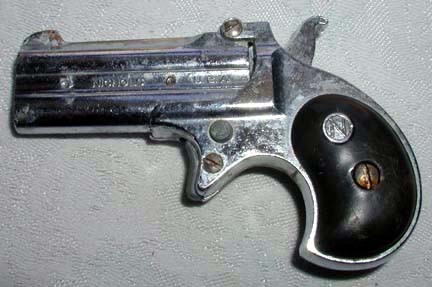
My friends and I all had these little Derringer cap pistols. We took 'em to school, of course, and reveled in the fact that we were secretly "packing heat." A kid could get into serious trouble taking one of these to school today. Posted by Hello

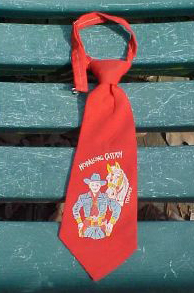
Yes, I had a red hand-painted Hopalong Cassidy necktie. I wore it to church and other formal occasions. Posted by Hello

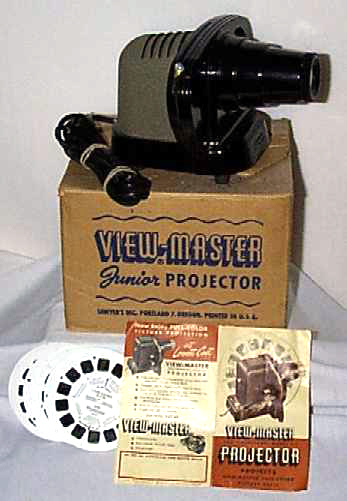
Almost all of my friends had View Master viewers and reels, but I was the only one with a projector. I bored their brains out with forced presentations projected on the whitewashed cement block wall of my basement. Posted by Hello

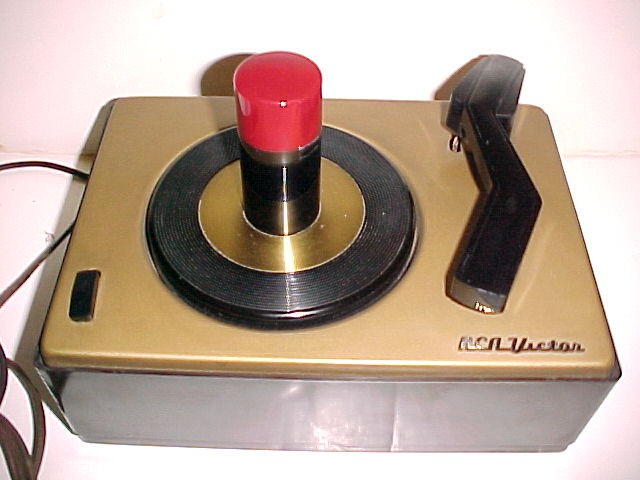
I never had one of these, but my best friend Tom did. This little RCA Victor phonograph, that only played 45 rpm records is the main reason the 45 format succeeded. There were literally millions of these things sold, despite the fact that the fidelity was awful and the amplification was feeble. This was a phonograph for the masses. It was, of course, monophonic, stereo being a few years in the future and, at the time of its introduction, available only on 33 1/3 rmp records. Posted by Hello

The original Noma Bubble-Lites. My dad bought a couple of sets from the Western Auto store and thought they were ultra cool. Kind of a prototype of the lava lamp. Posted by Hello

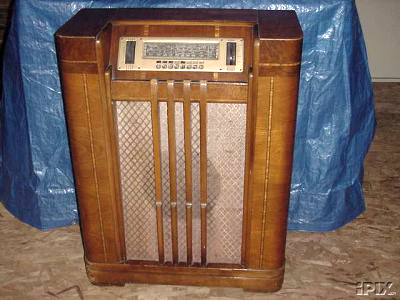
For the first seven years of my life, a big Philco console radio like this was the source of broadcast entertainment in our house. It stood about four feet high, had a series of pre-set station buttons and received broadcasts in the AM and shortwave bands. It was made years before transistors, so there was a warmup period of a minute or so between the time you switched it on and when you began to hear sounds. Ahhh, vacuum tube technology. Posted by Hello

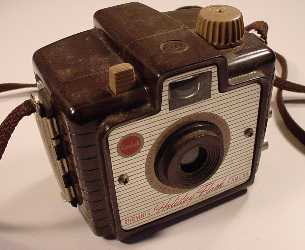
Who knew that this cheesy little box camera would put me on the path to photojournalism? My parents bought me one just like this on the eve of our trip to Yellowstone National Park the summer between my fifth- and sixth-grade years. It took 127 type film and made a very satisfying "click" when I pushed the shutter button. I would have been utterly dazzled to know about today's digital photo technology. Posted by Hello

Sunday, September 12, 2004

Reelin' in the years...

I’m sure most of us can look back at our childhood and think of it as the ideal time to be a kid.
That’s certainly the case with me and I see the childhood worlds of kids since the 1950s as sterile and devoid of the kind of freedom my friends and I experienced growing up in a small town in the decade or so after World War II.
It seems to me that we’ve become increasingly frightened and protective of our kids, to the point where they’re content to be couch potatoes and video game addicts rather than riding bicycles all over town or tramping through the woods like we did.
Among my favorite things of childhood was Saturday morning TV. When I started watching, it was all black-and-white and included such staples as:
The Lone Ranger
Ruff ‘n Reddy – the first Hanna-Barbera cartoon series
Space Patrol – a pioneering science fiction series
Fury – a series about a boy and his horse
Sky King – an aviation-minded show in which Sky and his niece Penny flew around in a twin-engined Beechcraft called the Songbird and solved mysteries
And my personal fave: Captain Midnight
Captain Midnight had been around as a character since before World War II and kids had been joining his Secret Squadron since long before I was born in 1945.
The television series that ran from 1955 to 1957 was the final incarnation of the character and starred Richard Webb. It was easy to join. All you had to do was send in the wax paper seal from a jar of Ovaltine chocolate drink mix and $1 to:
Captain Midnight
Box P
Chicago, 7
Illinois
Yes, kids, that was before Zip Codes were implemented in the early 1960s and big cities like Chicago were divided into postal zones.
By return post – which seemed to take freaking forever – you got a membership card, manual and decoder badge. The decoder was used to communicate with fellow Secret Squadron members and to decipher a secret message given at the end of each week’s program. Not exactly the Enigma machine, but it was great fun for a boy.
Conspicuous in its absence was the “pocket locator” – a walkie-talkie-like communicator that the Captain used to enlist the help of Secret Squadron kids in various dramatic episodes. All of the kids on the show had them, but there was no mention of them in the membership literature, largely because they were beyond the technology of the day.
I thought of that the other day when I took a call on my Handspring Treo 300 cell phone, realizing we’ve taken the personal communication concept far beyond the wildest imagination of a 1950s TV show.
Everyone in the Secret Squadron had a membership number. Captain Midnight, being at the head of the food chain, was SQ 1 (notice they avoided the more obvious SS designation, no doubt because that letter combination had a very bad reputation from the recently deceased Third Reich). SQ 2 was the Captain’s comic sidekick, Ichabod Mudd, or Ikky as he preferred to be called. The Captain and Ikky lived in a mountaintop observatory/laboratory along with Aristotle Jones, nicknamed Tut and played by Olan Soule. Tut was the scientist and gadget maker. Accordingly, he wore glasses and a white lab coat and was obviously the brains of the organization. Tut was SQ 3.
Far far down the mountain in the real world were the actual Ovaltine-drinking, card-carrying, pocket-locator-deprived Secret Squadron kids. The card in my wallet identified me to all and sundry as SQ 24418. I made a point of memorizing the number, but this is quite possibly the first time since childhood that I’ve written it.
Along with the basic membership kit, you could also send off for a red plastic Captain Midnight Ovaltine mug and a red plastic Captain Midnight Ovaltine shaker cup with blue plastic top. Both were emblazoned with a decal showing a goggled previous incarnation of the Captain with some goofy winged midnight-indicating clock logo on his flight helmet and proclaiming, “Ovaltine – the heart of a hearty breakfast!” Naturally, I had both items and used them often.
A second version of the decoder badge, resembling the Captain’s jet plane – the Silver Dart – came out in 1957 and, of course, I had that too.
But one by one, over the years, all of those items save the Ovaltine mug, went missing and I found myself wishing I had them back.
Fortunately for nostalgia-ridden baby boomers, there’s Ebay and the chance to recapture the toys, touchstones and talismans of our childhood. In recent years, I’ve replaced my two decoder badges and now stand ready to decipher any message sent to me by a Secret Squadron member.
Fortunately, I realized early on that I couldn’t afford to buy all of the stuff I had as a child. Besides, where would I put it? My wife already thinks I’m a little nuts about hanging on to stuff and the last thing she would tolerate would be a museum of my childhood.
So, I do the next best thing. I snarf the photos of these items when I find them on Ebay, making it possible for me to look at them without actually having to find a place for them.
I’ll post a few of those pictures, just in case someone else remembers them.
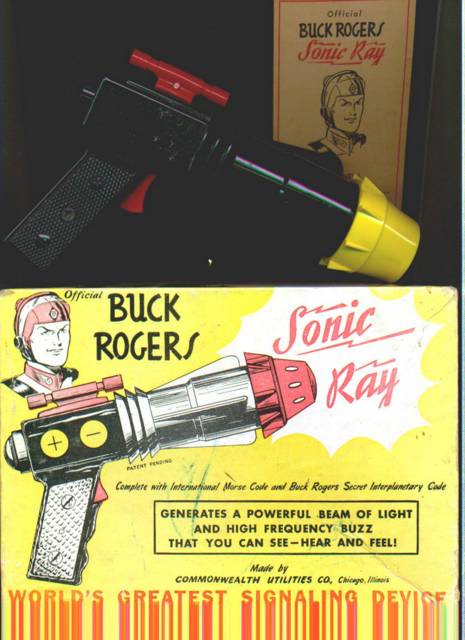
But somehow a picture of the Buck Rogers Sonic Ray Gun, a pistol-shaped plastic flashlight with a buzzer, can’t reproduce the barf-like smell of the plastic that fascinated me when I was 9 years old.

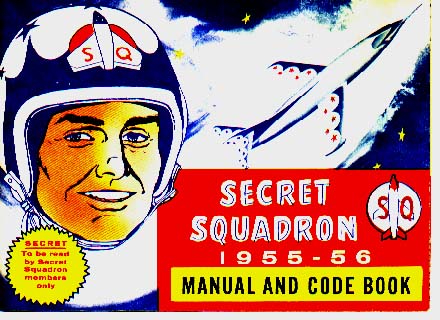
We managed to overlook the fact that the drawing of Captain Midnight on the manual cover didn't look anything like actor Richard Webb, who played the lead role in the Saturday morning TV series. Posted by Hello

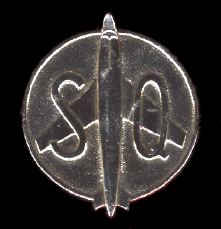
The 1955-56 Captain Midnight Secret Squadron decoder badge. My membership number was SQ 24418. Posted by Hello

The 1957 model Captain Midnight Secret Squadron decoder badge. The decoder stuff is on the other side. The red nose cap detaches to reveal a secret compartment in the fuselage for hiding lint. Posted by Hello

The cast of the 1950s sci-fi series Space Patrol. Watch where you point that disintegrator ray, Cadet Happy! Posted by Hello

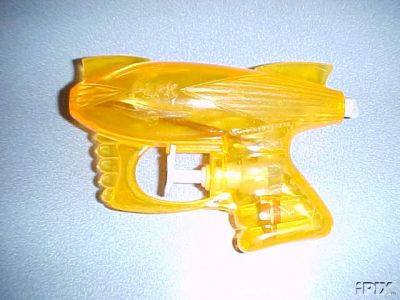
Remember these water pistols? It seems like they showed up in the hallways of my grade school every spring until the teachers confiscated all of them. Posted by Hello

This was an early clue that I was doomed to a career in newspapers. A Superior Cub printing set like this was one of my favorite toys, despite the tedious process of hand-setting those little pieces of rubber type. Posted by Hello

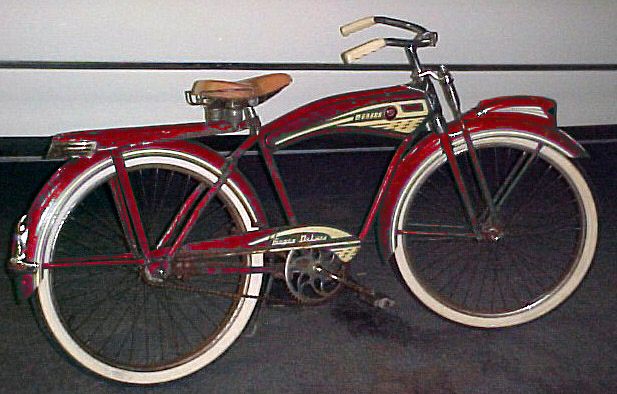
This was my first bicycle - a red Monark with a streamlined front fender headlight and a feeble battery powered electric horn in the tank, operated by the red button on the right side. (Well, actually this is a picture of a similar bike I found on Ebay.) It had one speed, coaster brakes and stood up to a lot of abuse, including a few years of delivering newspapers. Posted by Hello

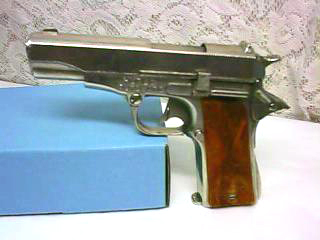
The Hubley cap gun version of the the Colt 1911 automatic pistol - this was my alltime favorite cap gun. As a grownup, I now own the real thing. Posted by Hello

O, frabjous day! Calloo! Callay!

CB's blog is back, albeit with a declaration he won't write anything about what he or his buddies are doing in Mosul. He did, to my great joy, restore all of his earlier posts which give you a powerful sense of what it's like to be an American soldier in Iraq:
Go there now: http://cbftw.blogspot.com/

Friday, September 10, 2004


Ahhhh, the Gilbert Erector Set. Yeah, I know what you're thinking. It's not that kind of erection. This kit came with a whole bunch of metal pieces and about a bazillion little screws and nuts and an ELECTRIC MOTOR to power whatever you cared to build. Imagine how fast you could put this stuff together with one of today's power screwdrivers! I spent hundreds of hours screwing around with one of these sets. Posted by Hello

Remember woodburning sets? This was about the dopiest craft item you could give a kid. Why would you waste hours tracing pictures onto wood blocks with a hot iron when you could use that same tool to melt crayons and candles and burn holes in every plastic item you could get your hands on? Posted by Hello

The Buck Rogers Sonic Ray gun - it was a flashlight that used two D cells and had a buzzer that sounded when you pulled the trigger. I'll bet you didn't know that this was the World's Greatest Signaling Device. It says so right there on the box. When you unscrewed the yellow lens/bulb holder and sniffed the battery compartment, the plastic smelled like barf. Posted by Hello

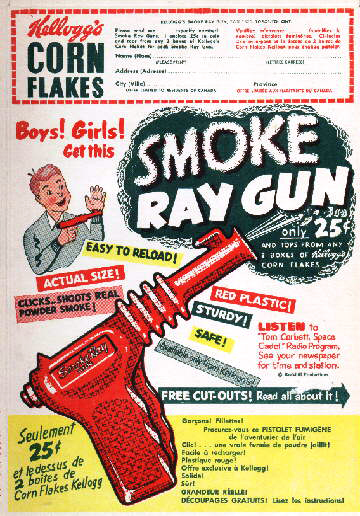
Smoke ray gun? What the hell is a smoke ray and how could it work? We kids didn't trouble ourselves with such questions, we just ponied up our quarter and our corn flakes boxtop and waited for the postman to bring our guy. I think the "smoke" was just dust from a flour-like powder that got poofed out of the muzzle. I also remember my mother being very upset when I coated the arm of a couch with the powder. Posted by Hello

This is the semi-useless Space Patrol flashlight, made to look like a cool rocket. I think I had one, but I'm not sure. Maybe I just wanted one... Posted by Hello

Space Patrol binoculars!!! You had to send away for these things that had simple plastic lenses (no internal prisms or fancy optics) and kinda magnified far-away objects. Their wraparound style made them cool. But the elastic band that allowed hands-free use made them unspeakably stupid because it made it likely that the young user would try to walk around with the binocs in place, stumbling and crashing into furniture and mom's favorite African violets. Posted by Hello

Burn out your retinas! These cards came in Rice Chex and Wheat Chex cereal boxes, since Ralston Purina sponsored Space Patrol. If you stare at the negative image the prescribed number of seconds, then look away at a white surface, you see the positive image of the foxy Tonga or the wacky Cadet Happy floating in space. Posted by Hello

These little 3" high models of the Nike antiaircraft missile came in cereal boxes and were the bane of grade school teachers when they were in vogue. They were spring loaded (you could replace the stock spring with one from a ballpoint pen for more range) and could be shot from one classroom desk to another with stealthy ease. They could also put your eye out and would never get past the Kellogg's legal department today. Posted by Hello

These were soooo cool. The big submarine - it was supposed to be the U.S.S. Nautilus, the world's first atomic sub - and the larger frogmen came first and were items you had to send away for from Kellogg's. The smaller ones came later and were stuck in cereal boxes. You put baking powder in the conning tower of the sub and in the conical left foot extensions of the frogmen, then drop them into a goldfish bowl or other container of water. The baking powder would make a bubble that would bring the toy to the surface, it would escape and the toy would sink to the bottom again and on and on. I remember being in the third grade when I got the sub. The frogmen came later. Posted by Hello

Tuesday, September 07, 2004


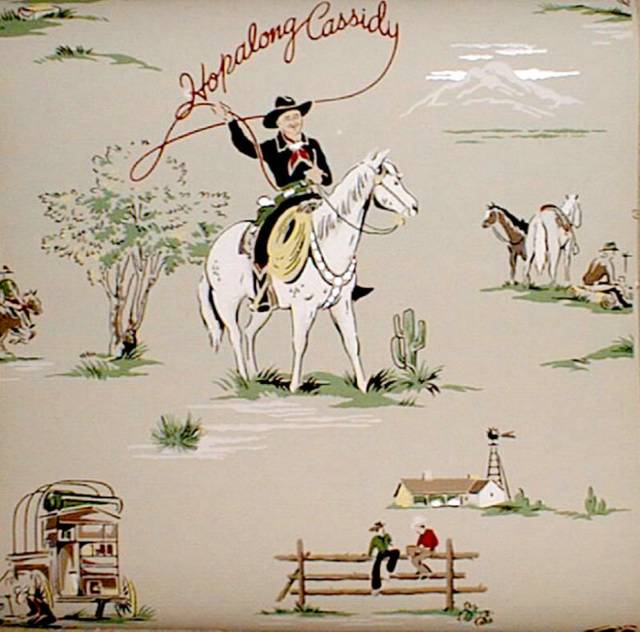
I just took a look at my recent posts and realized this is getting way too heavy and it's time to lighten things up. So here's a sample of the Hopalong Cassidy wallpaper my parents used to decorate my bedroom when I was in the first grade - 53 years ago (Ack!). I found an example of the wallpaper on Ebay a few years ago, bought it and had it framed. Posted by Hello

What happens then a plane crashes

Thirty-five years ago Thursday, I got my first taste of real disaster reporting.
At 3:29 p.m. Sept. 9, 1969, a student pilot from Indianapolis named Bob Carey, flying a Piper Cherokee, collided with Allegheny Airlines flight 853 southwest of Indianapolis. Carey and the 82 passengers and crew aboard the DC-9 jet airliner died in the resulting crash.
The jetliner came down in a soybean field about 100 yards north of the Shady Acres mobile home park near London, in Shelby County just as a school bus was unloading children. Even though debris peppered the mobile homes and some aircraft parts punched holes in trailer sides, no one on the ground was hurt.
I got a call at home almost immediately and was at the crash site within an hour of the impact.
The authorities were slow to control the crash scene, making it possible for me and several other reporters and photographers to roam at will, including through the soybean field which was drenched with kerosene jet fuel.
The sight was grisly beyond imagining. The plane disintegrated upon impact and the force of those thousands of pieces of metal shredded everything it their path. I walked that field for at least a couple of hours. The sun set at 7:04 p.m. and I finally left the field when it became too dark to see where I was stepping.
In all that time, I didn’t see a single intact body – just scores of arms, legs, feet still in shoes, hands, the back of a man’s head, the contents of luggage and hundreds of dollars in cash. I touched nothing. Neither did any of my colleagues.
As I drove to the scene, I’d wondered how I would react to the carnage I was sure to encounter. Would I be overwhelmed? Would it get queasy, or worse?
As it turned out, I felt a cautious kind of detachment. Looking at those body parts, I couldn’t conceive of them ever having been part of living, breathing human beings. It was as if someone had strewn a truckload of plastic body parts through the bean field.
It was estimated that 12 seconds elapsed between the collision and the jetliner’s impact with the ground. The passengers had a full 12 seconds to notice the jolt of the collision, the rolling of their plane to the left into an inverted attitude and the plunge to earth. That’s the horror that creeps me out the most.
Their deaths must have been virtually painless.
I think about the crash and that soybean field every September and every time I fly.
I’ll think about it in a couple of weeks when I fly to Portland for my son’s wedding and realize that I’ve seen something none of my fellow passengers will never see – what happens when an aluminum tube full of people falls out of the sky.
Dan McGlaun, a private pilot, has an online analysis of the crash and its circumstances, including several of my photos. It’s at http://www.mcglaun.com/1969.htm
Going strictly by the statistics, flying is still safer than driving and nowhere nearly as risky as motorcycling. But I much prefer the measure of control I have on my bike to the helpless feeling of being a passenger on a jetliner.

Monday, September 06, 2004

Phew

It appears my friend Susan in Palm Coast, Fla., dodged the bullet with Hurricane Frances.
She called last night to report wind damage to their house was minimal, although the canal behind the house which links with the ICW was way up over the seawall and the water level was about 10 feet from their back door with high tide on the way. The were also without electricity and were having to call their friends in the north to get the bigger picture, weather-wise.
I told her it looked like she could expect at least another six hours of rain, but that the wind danger was abating.
Okay, so maybe I overreacted a few days ago when I questioned her decision to stay put. But Frances, like most hurricanes, is/was an unpredictable animal with lots of surprises. Who knew it would slow down, lose intensity and then crawl ashore as a Category 2 hurricane?
But hurricanes aside, there is no doubt in my mind that the east coast of Florida is doomed if and when the volcano at LaPalma in the Canary Islands sheds its western flank.
Here's the story from the BBC website http://www.bbc.co.uk/science/horizon/2000/mega_tsunami.shtml

Scattered across the world’s oceans are a handful of rare geological time-bombs. Once unleashed they create an extraordinary phenomenon, a gigantic tidal wave, far bigger than any normal tsunami, able to cross oceans and ravage countries on the other side of the world. Only recently have scientists realised the next episode is likely to begin at the Canary Islands, off North Africa, where a wall of water will one day be created which will race across the entire Atlantic ocean at the speed of a jet airliner to devastate the east coast of the United States. America will have been struck by a mega-tsunami.

Back in 1953 two geologists travelled to a remote bay in Alaska looking for oil. They gradually realised that in the past the bay had been struck by huge waves, and wondered what could have possibly caused them. Five years later, they got their answer. In 1958 there was a landslide, in which a towering cliff collapsed into the bay, creating a wave half a kilometre high, higher than any skyscraper on Earth. The true destructive potential of landslide-generated tsunami, which scientists named "Mega-tsunami", suddenly began to be appreciated. If a modest-sized landslide in Alaska could create a wave of this size, what havoc could a really huge landslide cause?

Scientists now realise that the greatest danger comes from large volcanic islands, which are particularly prone to these massive landslides. Geologists began to look for evidence of past landslides on the sea bed, and what they saw astonished them. The sea floor around Hawaii, for instance, was covered with the remains of millions of years’ worth of ancient landslides, colossal in size.

But huge landslides and the mega-tsunami that they cause are extremely rare - the last one happened 4,000 years ago on the island of Réunion. The growing concern is that the ideal conditions for just such a landslide - and consequent mega-tsunami - now exist on the island of La Palma in the Canaries. In 1949 the southern volcano on the island erupted. During the eruption an enormous crack appeared across one side of the volcano, as the western half slipped a few metres towards the Atlantic before stopping in its tracks. Although the volcano presents no danger while it is quiescent, scientists believe the western flank will give way completely during some future eruption on the summit of the volcano. In other words, any time in the next few thousand years a huge section of southern La Palma, weighing 500 thousand million tonnes, will fall into the Atlantic ocean.

What will happen when the volcano on La Palma collapses? Scientists predict that it will generate a wave that will be almost inconceivably destructive, far bigger than anything ever witnessed in modern times. It will surge across the entire Atlantic in a matter of hours, engulfing the whole US east coast, sweeping away everything in its path up to 20km inland. Boston would be hit first, followed by New York, then all the way down the coast to Miami and the Caribbean.


Another site estimates the wave that will hit Forida at 50 meters (164 ft.) That's why Florida isn't on my list of places I'd like to live.

Friday, September 03, 2004

Random thoughts on a Friday afternoon

Holy crap! Just learned from Count Chocula's blog that Laura Branigan died. Brain aneurysm. She was a fellow Cancerian (July 3) and only 47. Crap.

Give 'em hell, Zell!

Maria's big Italian family is having its Labor Day reunion on Sunday. Her Amish brother will be there with his outrageously photogenic kids, which means Maria and I will experience the whole event through the viewfinders of our cameras. It occurred to me the last time we visited the Amish brother and his family that we spend very little time socializing with the adults. We escape from the grownups as quickly and as graciously as we can, grab our cameras and usually come home with at least 300 digital photos of the kids. Fortunately, there are lots of other grownups there, so maybe our absence isn't that conspicuous.
I raised the possibility of leaving the cameras home for one of these visits, but the prospect of missing all those great shots is just unthinkable.

I see Bill Clinton is having heart surgery. How convenient. That will limit his ability to campaign for Kerry, but then Hillary's game plan to run in 2008 hinges on Kerry losing this year.

Driving up the interstate yesterday afternoon, I glanced over at a row of duplexes along a frontage road and was startled to see the Confederate battle flag flying over the U.S. flag on a front yard flagpole. I can't even guess what message that is supposed to send, but it's sure to piss a lot of people off. I considered calling the sheriff's department to give them a heads-up that the people living there might be needing protection from irate passers-by. But then I decided it would be more interesting to stay out of it.

People are starting to comment covetously about my yellow Lance Armstrong Foundation "Livestrong" wrist band. It seems they're in huge demand because of the exposure they got during the Tour de Frog and the Olympics and the LAF can't produce them fast enough. They're supposed to go for a $1 donation, but I've seen them trading on Ebay at $14 and more. I have an extra, still in the package, if someone is really really desperate...

My friend Susan in Palm Coast, Fla., has decided to stay put and ride out Hurricane Frances. I think that's a desperately stupid decision, but I hope I'm wrong. We'll know who's right come Monday.

My wife still hates my Treo 300 palm pilot/cell phone.

I've been trying to access my account information on www.sprintpcs.com and the site has been down all day. What's up with that?
Did you know that Sprint was originally an after-hours long-distance phone network that utilized the Southern Pacific Railroad's communication network during off-peak times? I had an account with them back around 1977 or '78.

I went to college in town that was famous for gambling and prostitution. The Saturday Evening Post did an expose on the town in the '50s, calling it "Sin City." By the time I got there in the fall of 1963, it was still a pretty randy place and there were at least a half-dozen houses of prostitution within 5 blocks of campus. One night a fraternity brother and I were walking past one of the storefont brothels on our way to McDonald's when a black prostitute hailed us with, "Is your moojie winkin'? Do you wanna do it?"
We can still crack each other up with that line.